The Daily Brief
A disciplined archive of what moved the election story each day — from EC directives to campaign turning points and integrity signals.
EC reiterates no postponement despite weather concerns
Amid speculation that heavy winter conditions could delay voting in mountain districts, the Election Commission has publicly affirmed its commitment to the 5 March date. Contingency plans include early transport of materials and flexible deployment.
FEBRUARY 15, 2026
Traditional parties adjust alliances amid new competition
Major parties such as Nepali Congress, CPN-UML and Maoist Centre are exploring flexible alliances at both federal and provincial levels. Leaders are weighing how to respond to the rise of alternative and youth-led forces.
Read Full BriefLegacy of Gen Z uprising shapes trust in 2026 election
The snap election follows youth-led anti-corruption protests in September 2025 that toppled the previous government. Many young voters now see the March poll as a test of whether institutions have learned from that trauma.
Read Full BriefSecurity agencies plan high-altitude and protest-sensitive deployment
Security officials say they are preparing special deployments for high-altitude districts and areas hit hard by recent protests. Joint operation centres are planned to run until after vote counting.
Read Full BriefCandidate registration shows 3,484 aspirants from 68 parties
Recent reporting indicates that 3,484 candidates from 68 political parties and independents have filed nominations for first-past-the-post seats. This crowded field highlights both plural competition and concerns about vote fragmentation.
Read Full BriefMixed electoral system: 165 FPTP and 110 PR seats
The 2026 House of Representatives election will again use a mixed system with 165 first-past-the-post and 110 proportional representation seats. Voters will cast separate ballots for federal FPTP and PR tiers on election day.
Read Full BriefFEBRUARY 14, 2026
How to check your voter details online before 5 March
With less than three weeks to go, media and the Election Commission are amplifying guidance on how voters can verify their registration details online. The official voter roll search and pre-enrolment portals are now updated with data up to late Mangsir 2082, meaning most newly registered voters should already be visible.
Read Full BriefFEBRUARY 13, 2026
Inclusion debate sharpens around women and marginalised groups on PR lists
As parties prepare proportional representation lists, activists are pressing for stronger inclusion of women, Dalit, Madhesi, Janajati and other communities. The constitutional and legal requirements are clear, but the quality of representation within parties remains contested.
Read Full BriefSecurity agencies coordinate for peaceful March 5 polling
Security and home administration officials have begun coordination meetings with the Election Commission for the 2026 HoR election. While no extraordinary threat has been publicly flagged, authorities say they are planning for sensitive booths, long routes and potential misinformation-related tensions.
Read Full BriefUpper House alliances seen as rehearsal for HoR seat sharing
Major parties have coordinated for recent National Assembly elections, and leaders hint these formulas could influence March 5 HoR seat-sharing. Negotiations among Congress, UML, left fronts and Madhes-based parties are likely to intensify in the coming weeks.
Read Full BriefCode of conduct enforcement window starts from mid-Magh
The EC has reminded all three tiers of government and political actors that the 2082 code of conduct is in force from the first week of Magh. With less than a month left for the March 5 election, enforcement is moving into a stricter phase.
Read Full BriefFEBRUARY 12, 2026
Election Code of Conduct 2082 in force nationwide
The Election Commission’s Code of Conduct 2082 is now fully in effect for the March 5 House of Representatives election. It applies to governments at all three levels, parties, candidates, public officials, security agencies, media and voters, with penalties for serious violations.
Read Full BriefSecurity forces scale up deployment for March 5 polls
The government and security agencies have nearly completed preparations to deploy a multi-layer force of more than 300,000 personnel for the March 5 House of Representatives election. Nepal Police, Armed Police Force, the Nepali Army and temporary election police will work under an integrated security plan to safeguard polling centres nationwide.
Read Full BriefNepali Army moves into the field as third security ring
The Nepali Army has begun field deployment across the country roughly one month before the March 5 election, as part of the outer security ring. Troops are setting up base camps near sensitive locations to support civilian security agencies without directly managing polling booths.
Read Full BriefOnline campaigning faces tighter rules on social media and AI
New election rules explicitly restrict the use of social media and artificial intelligence to spread false or divisive content. Parties and candidates are being reminded that digital campaigning is subject to the same code of conduct as physical rallies.
Read Full Brief3,484 candidates and 68 parties enter House race
Candidate registration has closed with 3,484 individuals contesting the 165 first-past-the-post seats for the March 5 election. A total of 68 political parties, along with independents, are on the ballot, reflecting a highly fragmented but competitive party landscape.
Read Full BriefCampaign calendar and silence period explained for voters
The official campaign period for the March 5 election is concentrated in the second half of February, followed by a mandatory silence period. Voters will see intensified rallies, door-to-door canvassing and media outreach until the blackout begins two days before polling.
Read Full BriefSnap polls follow youth-led anti-corruption uprising
The March 5 election was called after large youth-led protests against corruption and governance failures in September 2025. An interim government headed by former chief justice Sushila Karki is overseeing the transition, with parties under pressure to respond to Generation Z’s demands.
Read Full BriefMixed electoral system remains for 2026 amid reform debate
Despite political debate over changing Nepal’s electoral model, the March 5 election will use the existing mixed system. Voters will elect 165 lawmakers through first-past-the-post and 110 through proportional representation, with an overall 3 percent threshold for parties in the PR tier.
Read Full BriefSecurity tightened at highly sensitive polling stations
Security agencies have classified a significantly higher number of polling stations as ‘highly sensitive’ compared to 2022, based on past conflict, geography and distance from security bases. These locations will see additional personnel and layered protection on March 5.
Read Full BriefElection Commission says logistics nearly complete despite winter
The Election Commission reports that distribution of ballot papers and key materials is in its final stage, even as winter weather poses challenges in high-altitude districts. Central warehouses have dispatched 14 categories of materials, while local offices have procured 37 types of items for polling centres.
Read Full BriefFEBRUARY 10, 2026
Debate continues on diaspora voting for this election
The Election Commission has urged the government to amend the Voter Registration Act to eventually enable out-of-country voting, as ordered by the Supreme Court. However, officials have not announced any concrete mechanism for Nepalis abroad to cast ballots in the March 5 election, leaving expectations and rumours in tension.
Read Full BriefFederal, provincial and local polls to be in separate phases
The Election Commission has confirmed that the March 5, 2026 House of Representatives election will not be held together with provincial and local polls. Provincial assemblies and local governments are now scheduled to face voters in 2027, marking a shift away from the previous practice of holding multiple tiers of elections together.
Read Full BriefIntegrated election security plan enters implementation phase
Authorities say the Integrated Election Security Plan for the March 5 polls is now being put into practice. Around 338,000 security personnel from the Nepali Army, Nepal Police, Armed Police Force and temporary election police are being mobilised, with special focus on sensitive polling locations.
Read Full BriefGen-Z movement drives focus on youth turnout
In the wake of last year’s youth-led anti-corruption protests, political parties and the Election Commission are under pressure to convert street mobilisation into electoral participation. Voter registration has been kept open for an extended period, with officials explicitly appealing to first-time voters to enrol.
Read Full BriefECN consults parties on code of conduct and campaign rules
The Election Commission has continued formal consultations with political parties about the March 5 election, including enforcement of the code of conduct and campaign finance rules. Party representatives have raised concerns about misuse of state resources, hate speech, and disinformation, urging impartial action.
Read Full BriefThousands of candidates and dozens of parties join the race
With nominations for first-past-the-post seats now closed, more than 3,400 candidates from 68 parties and independents are contesting the March 5 election. Observers say the crowded race reflects both voter demand for alternatives and continued strength of traditional forces.
Read Full BriefECN and security agencies address disinformation risks
Election and security officials say monitoring and responding to online disinformation is now part of the Integrated Election Security Plan. They warn that rumours about postponement, violence, or voting procedures could undermine trust if not addressed quickly.
Read Full BriefElection logistics for remote districts intensify
With less than a month to go, election offices are prioritising transport and staffing plans for remote and mountainous districts. Officials say coordination with security agencies and the Nepali Army is crucial to deliver materials to hard-to-reach polling centres before polling day.
Read Full BriefInclusion under spotlight as PR lists face scrutiny
With proportional representation lists already submitted, parties are facing scrutiny over whether they meet constitutional inclusion requirements. Women, Dalits, Madhesi, Janajati, Muslim and other communities are watching closely to see if their representation is symbolic or substantive.
Read Full Brief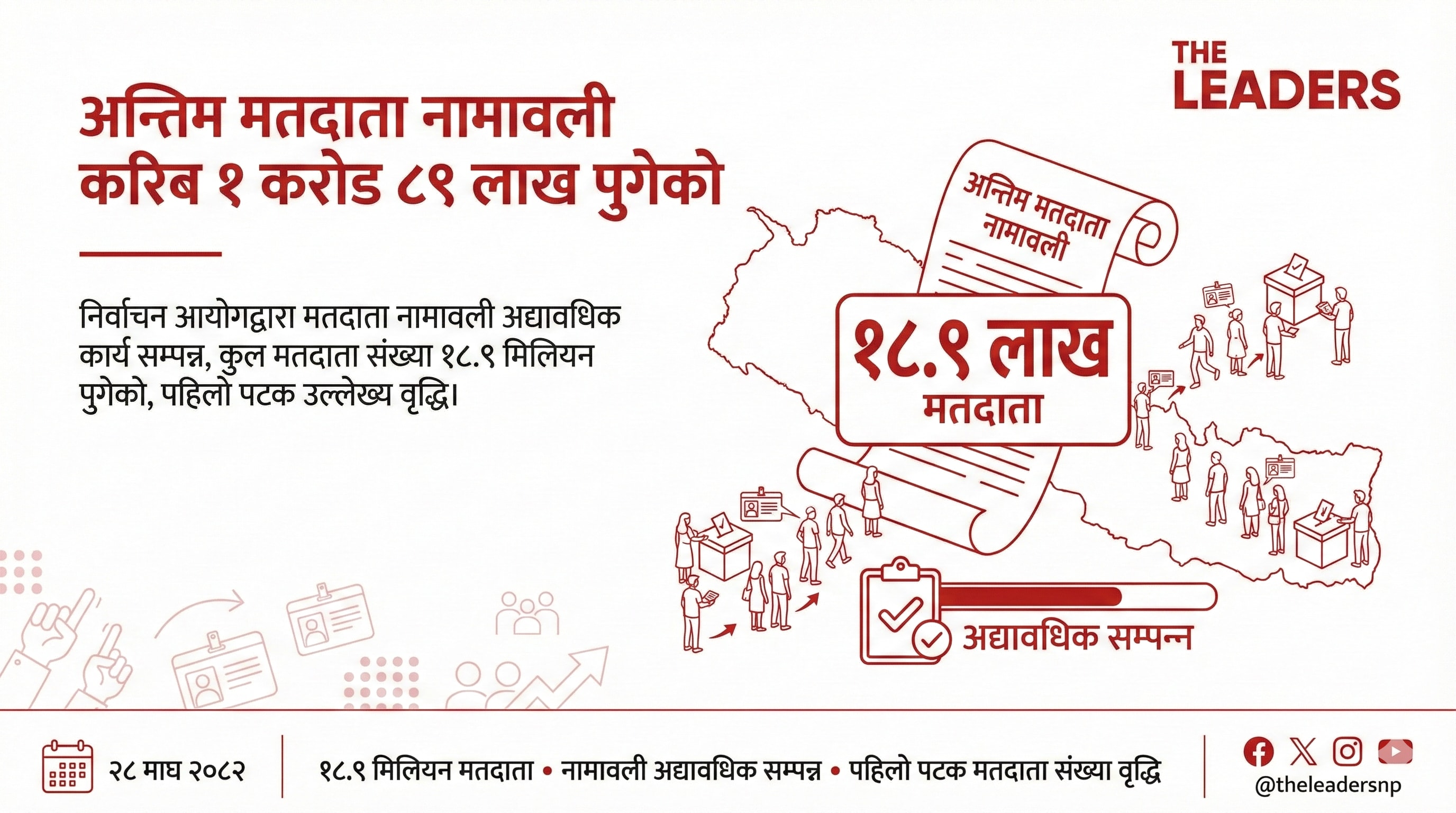
Final voters roll reaches about 18.9 million
The Election Commission has previously published the final voters roll for the March 5 election, listing around 18.9 million eligible voters. Officials say additional polling stations and centres have been added compared to 2022 to ease crowding and improve access.
Read Full Brief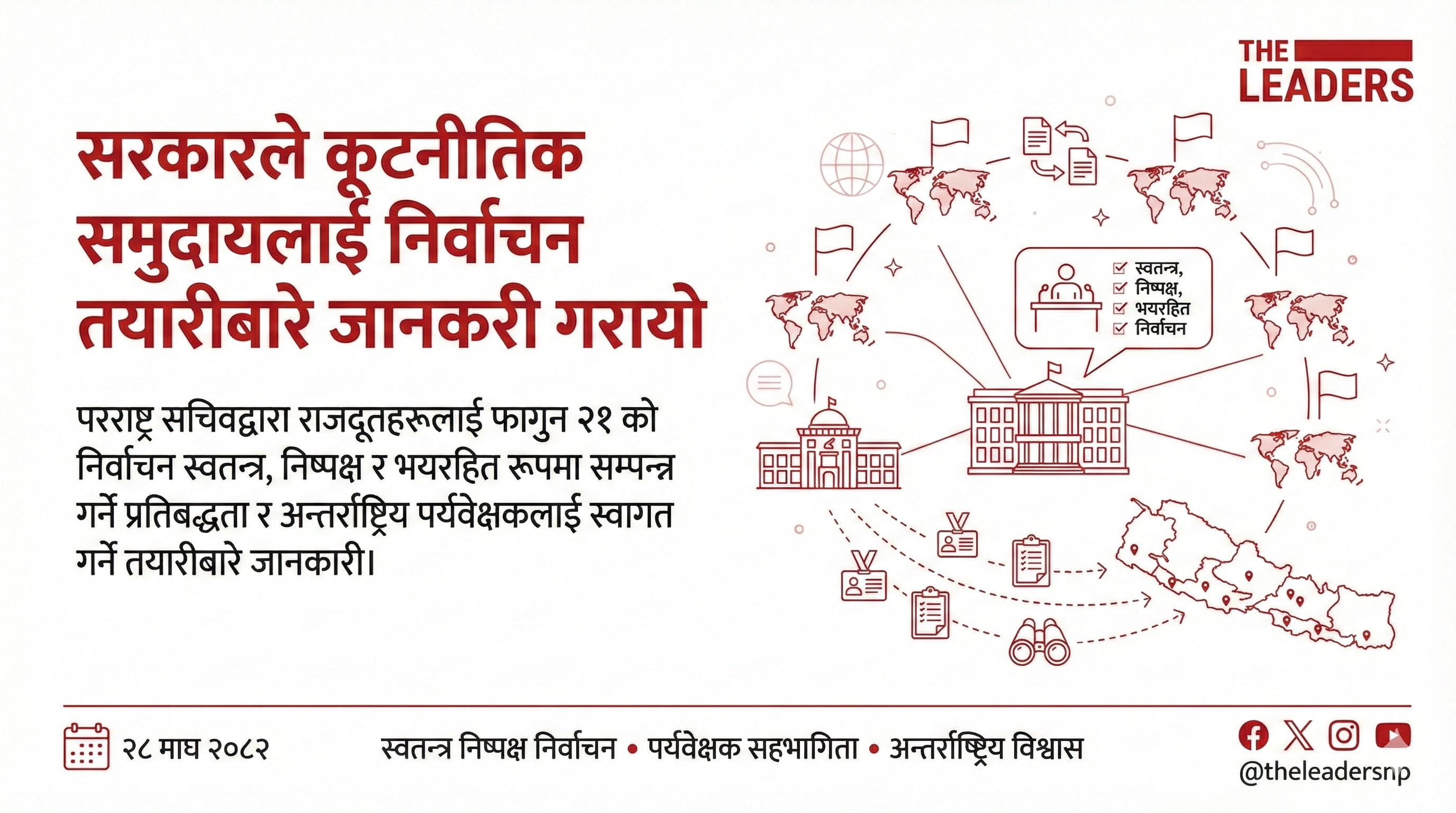
Government briefs diplomats on election preparedness
At a recent briefing for diplomatic missions and international organisations in Kathmandu, the government reaffirmed its commitment to free, fair and peaceful March 5 elections. Foreign Secretary Amrit Bahadur Rai said preparations by the government and Election Commission are well advanced and that observer participation is being encouraged.
Read Full Brief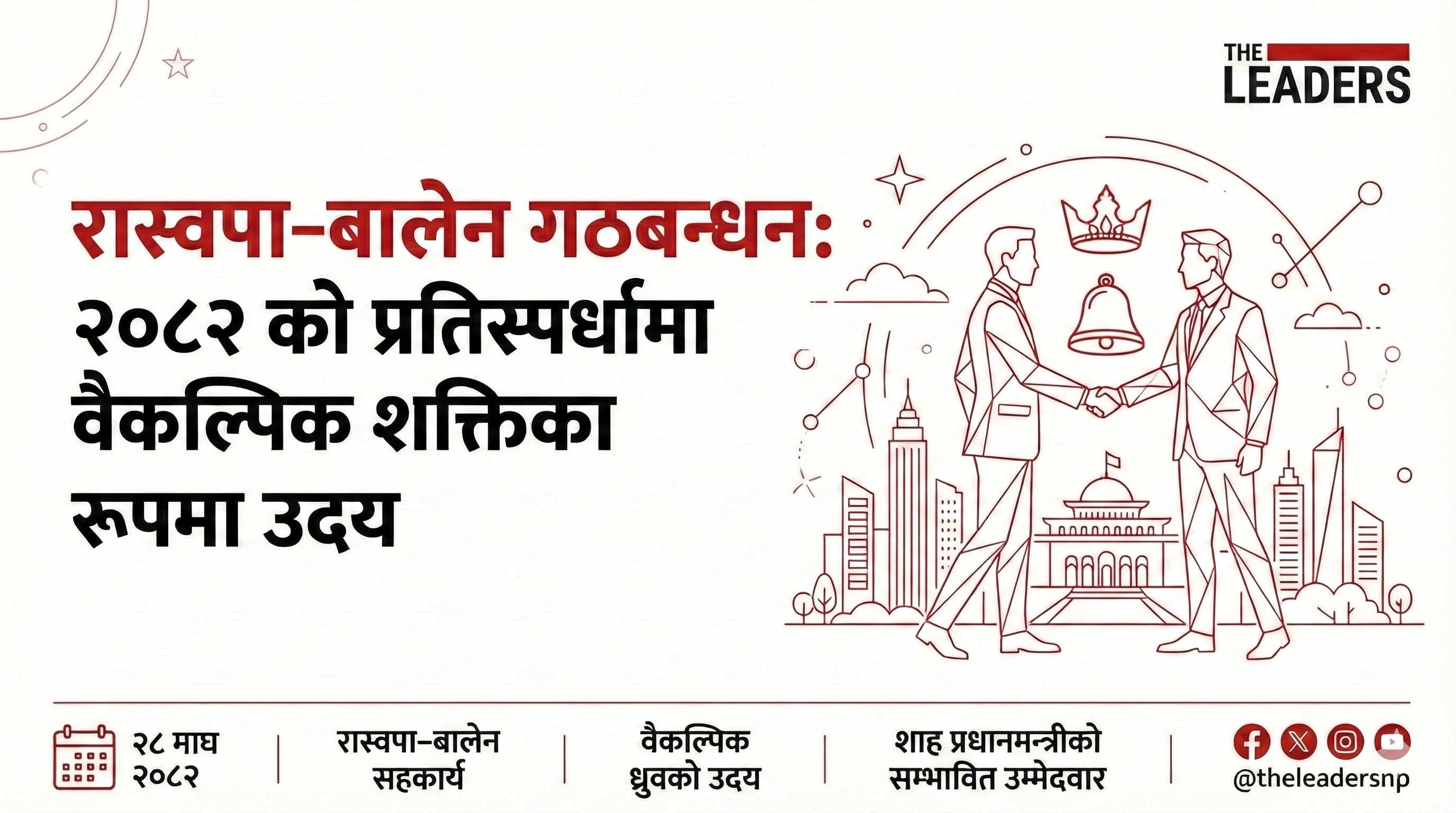
RSP–Balen alliance presents alternative pole in 2026 race
The partnership between Rastriya Swatantra Party leader Rabi Lamichhane and Kathmandu Mayor Balendra Shah is emerging as a key non-traditional bloc in the run-up to the March 5 elections. Under their agreement, Shah is projected as a prime ministerial face if the alliance wins a majority.
Read Full Brief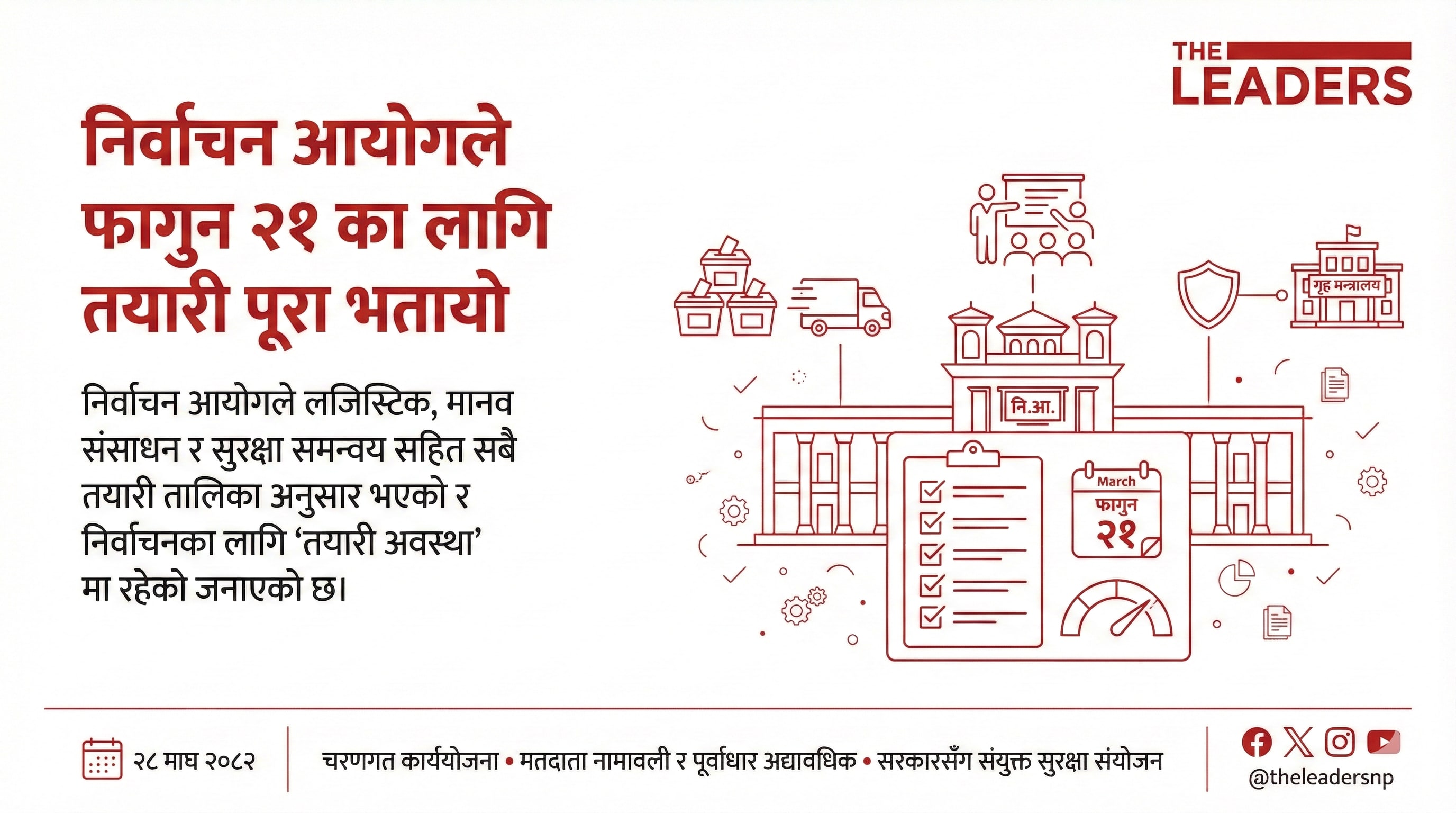
ECN says it is ready for March 5 polls
In a recent interview with state media, senior Election Commission officials reiterated that preparations for the March 5 House of Representatives election are on schedule. They highlighted progress on logistics, human resources, and security coordination, saying the commission remains in an 'election-ready' posture.
Read Full Brief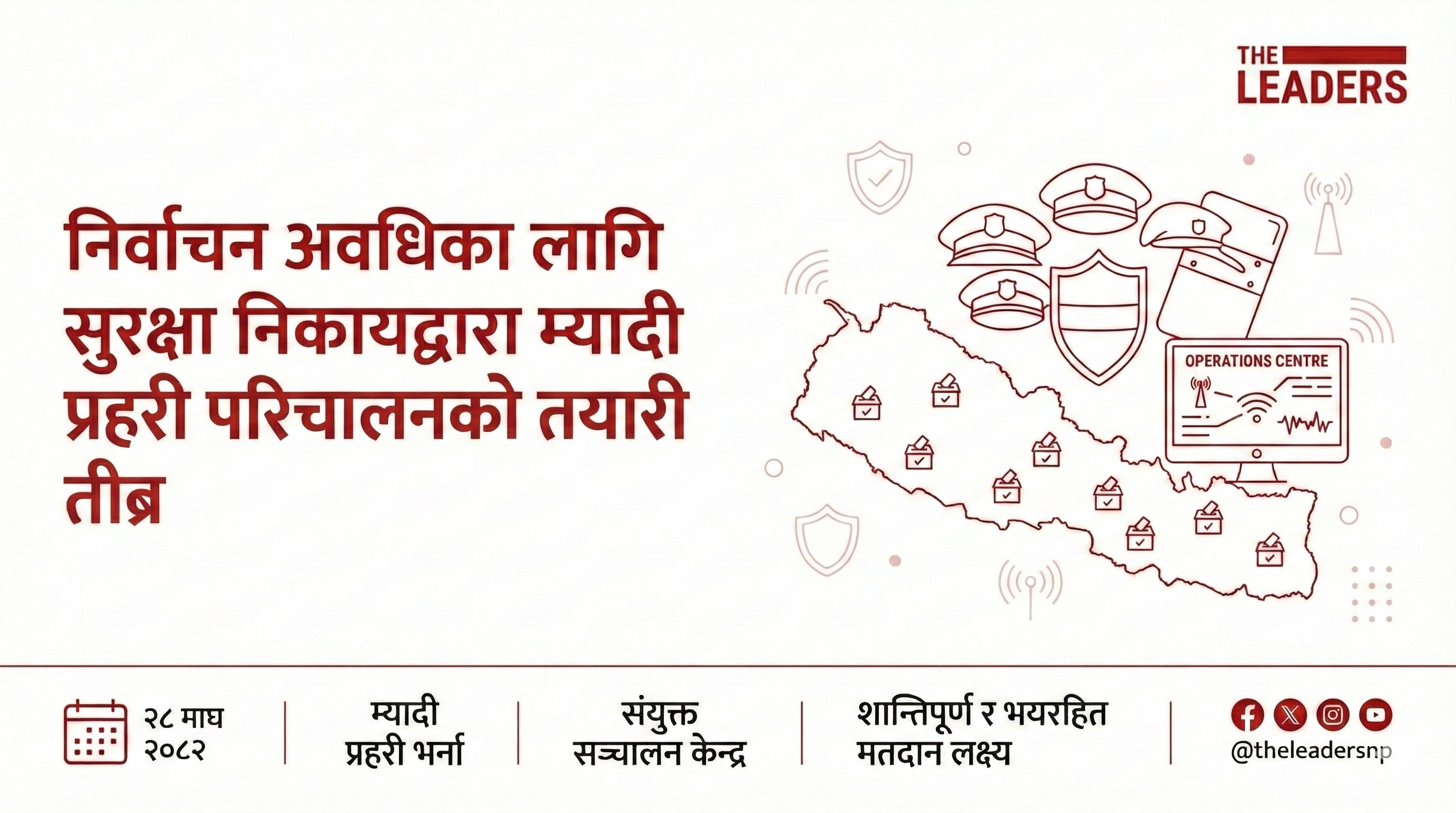
Security agencies prepare Myadi police deployment for election period
Security agencies, in coordination with the Election Commission, are preparing to deploy temporary (Myadi) police and joint operation centres for the March 5 polls. Officials say the goal is to ensure a peaceful environment while avoiding excessive force.
Read Full Brief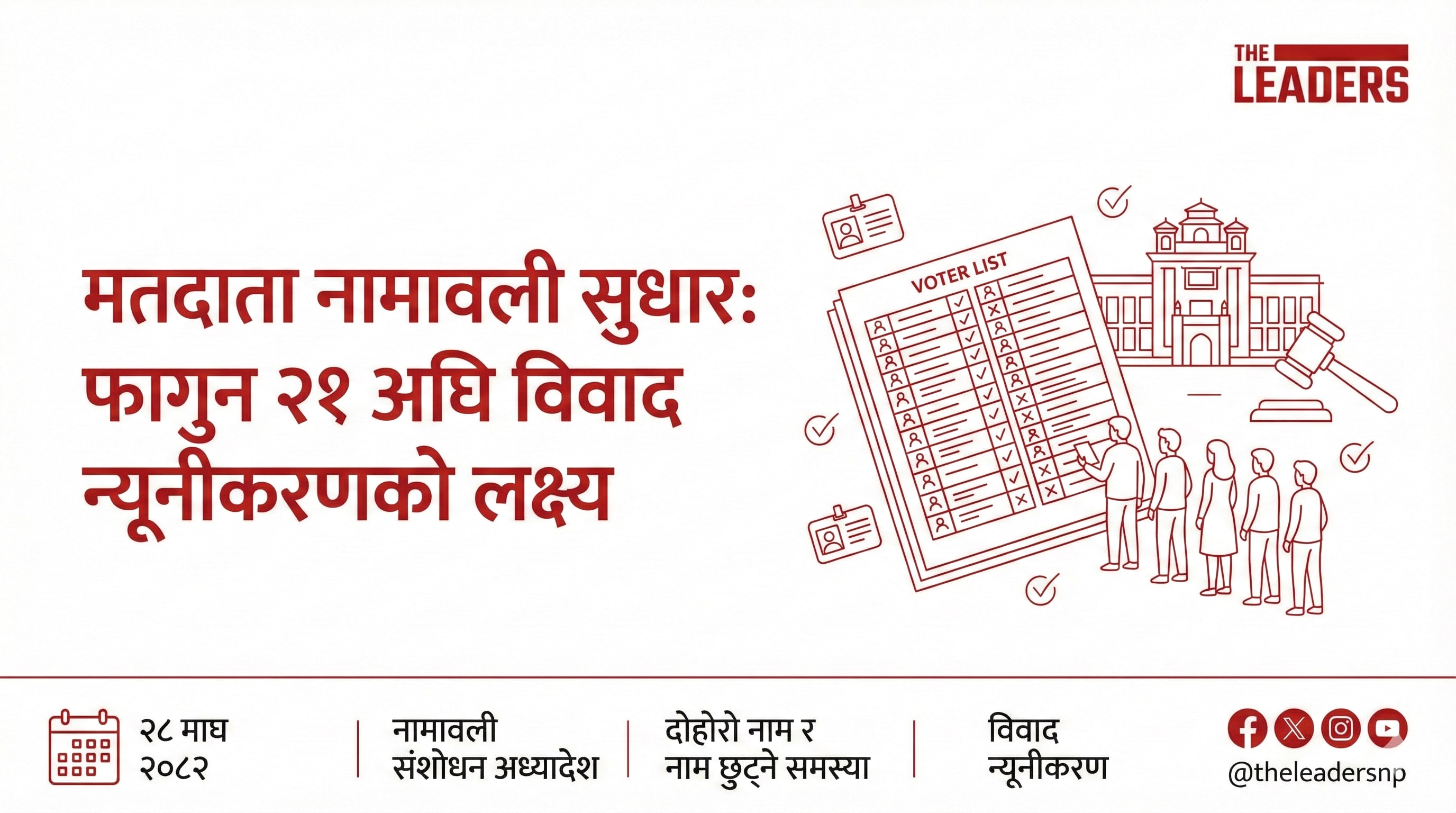
Voter list reform aims to reduce disputes before March 5
With the Voter List (Amendment) Ordinance now endorsed, the Election Commission is under pressure to clean and update rolls before the March 5 election. Past polls saw disputes over duplicate names, missing voters and documentation hurdles.
Read Full Brief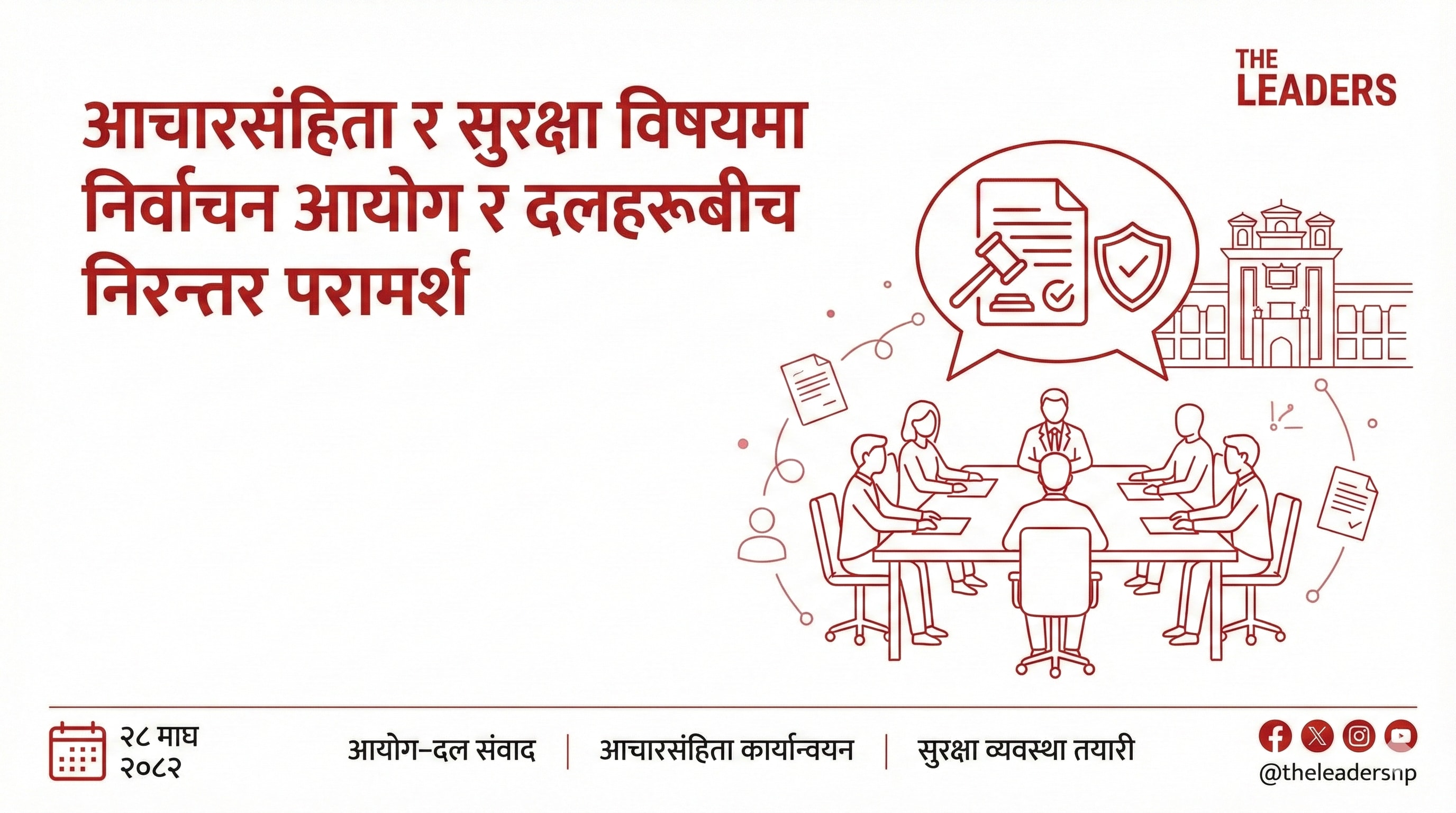
EC–party consultations focus on code of conduct and security
The Election Commission has continued formal consultations with political parties on the March 5 polls, with focus on code of conduct enforcement and election security. Parties have expressed willingness to participate but raised concerns about misuse of state resources and potential violence.
Read Full Brief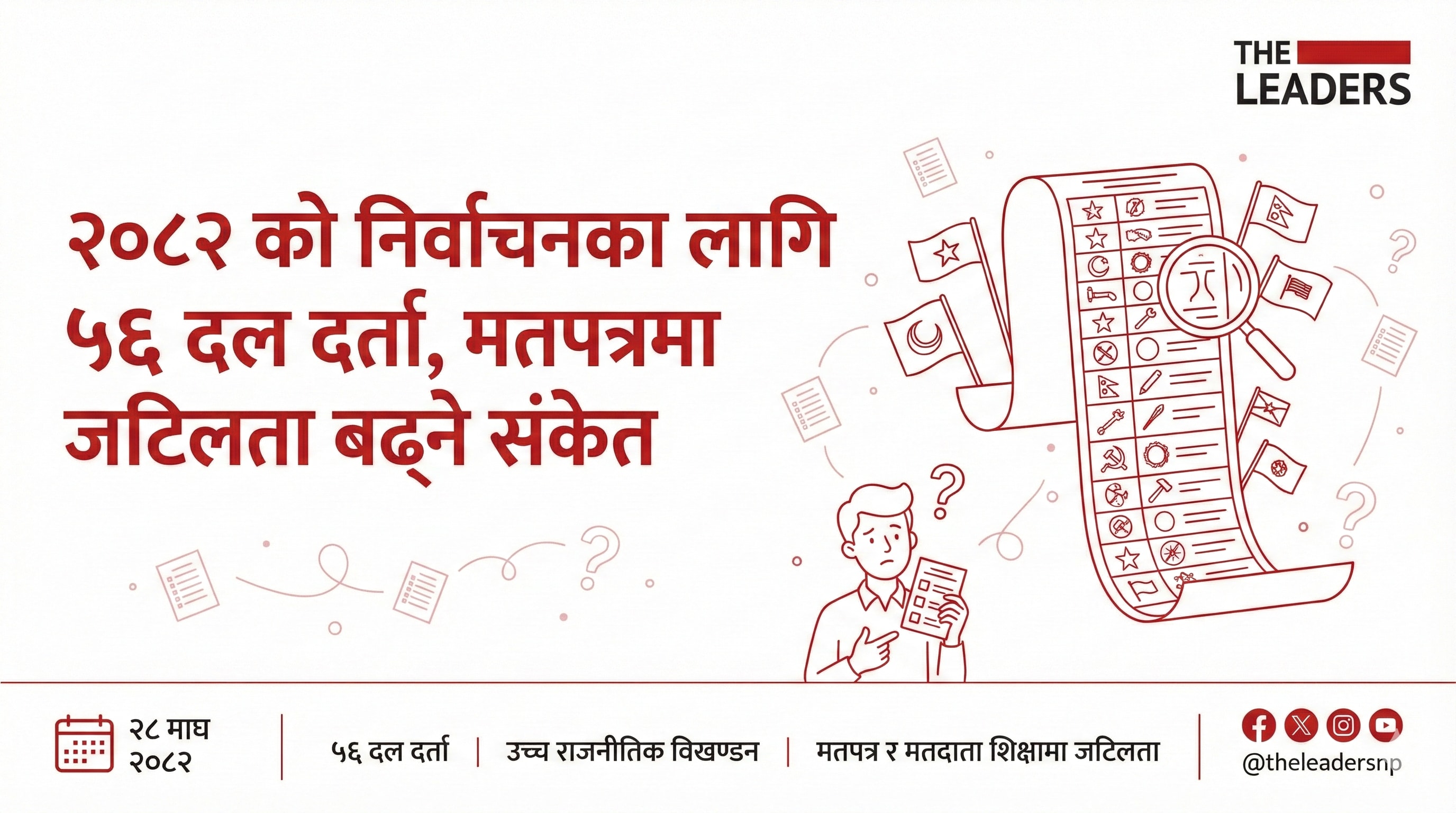
Party registrations reach 56 for 2026 polls, raising ballot complexity
The Election Commission has registered 56 political parties to contest the March 5 general election, according to recent media reports. The growing number of contestants reflects high political fragmentation and could make ballot design and voter choice more complex.
Read Full Brief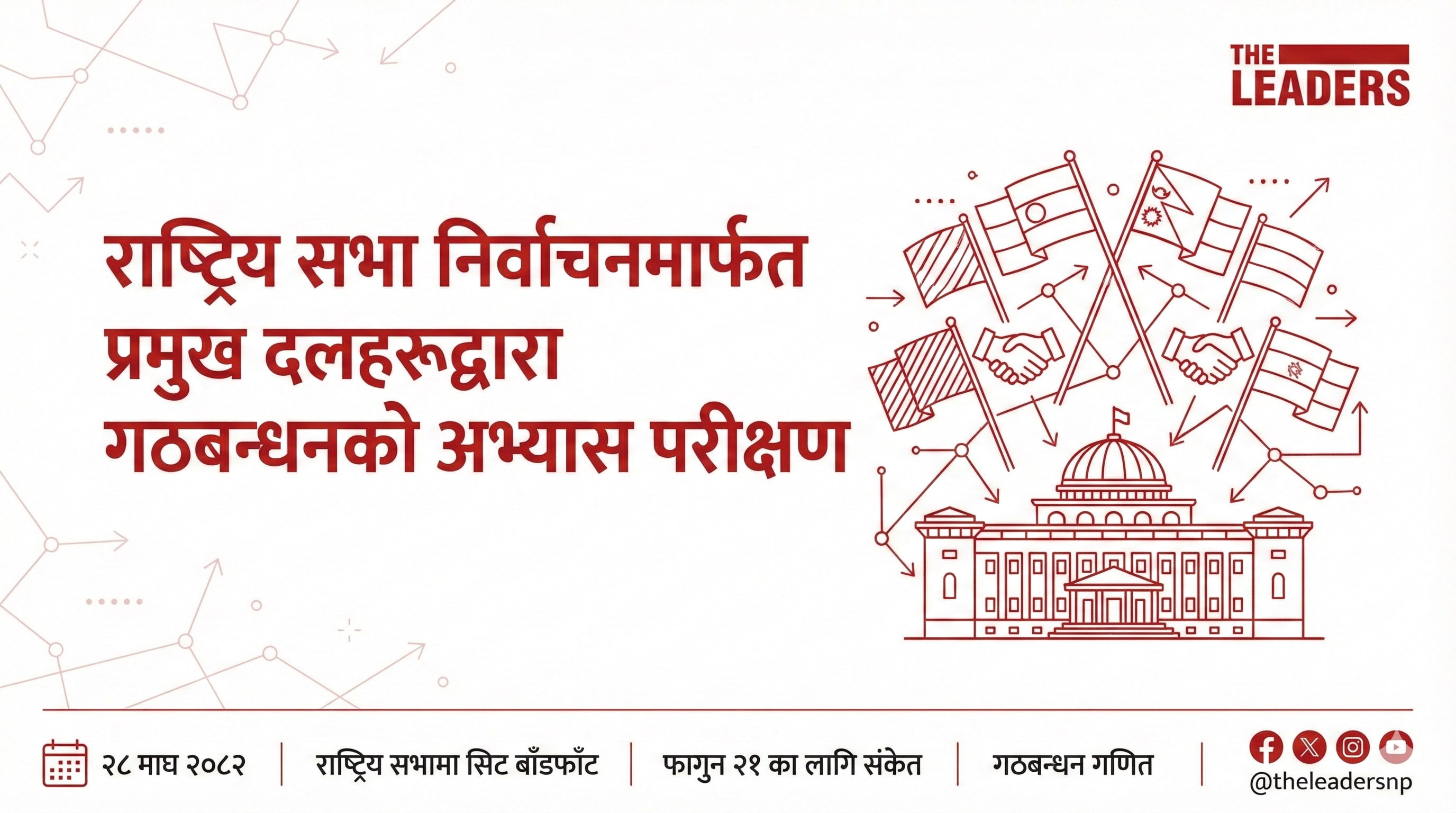
Major parties test alliance formulas in National Assembly polls
Seat-sharing negotiations among major parties for the January National Assembly election have given early signals of alliance arithmetic for the March 5 House polls. Deals between Nepali Congress, CPN-UML and other forces may influence how they coordinate in closely contested constituencies.
Read Full Brief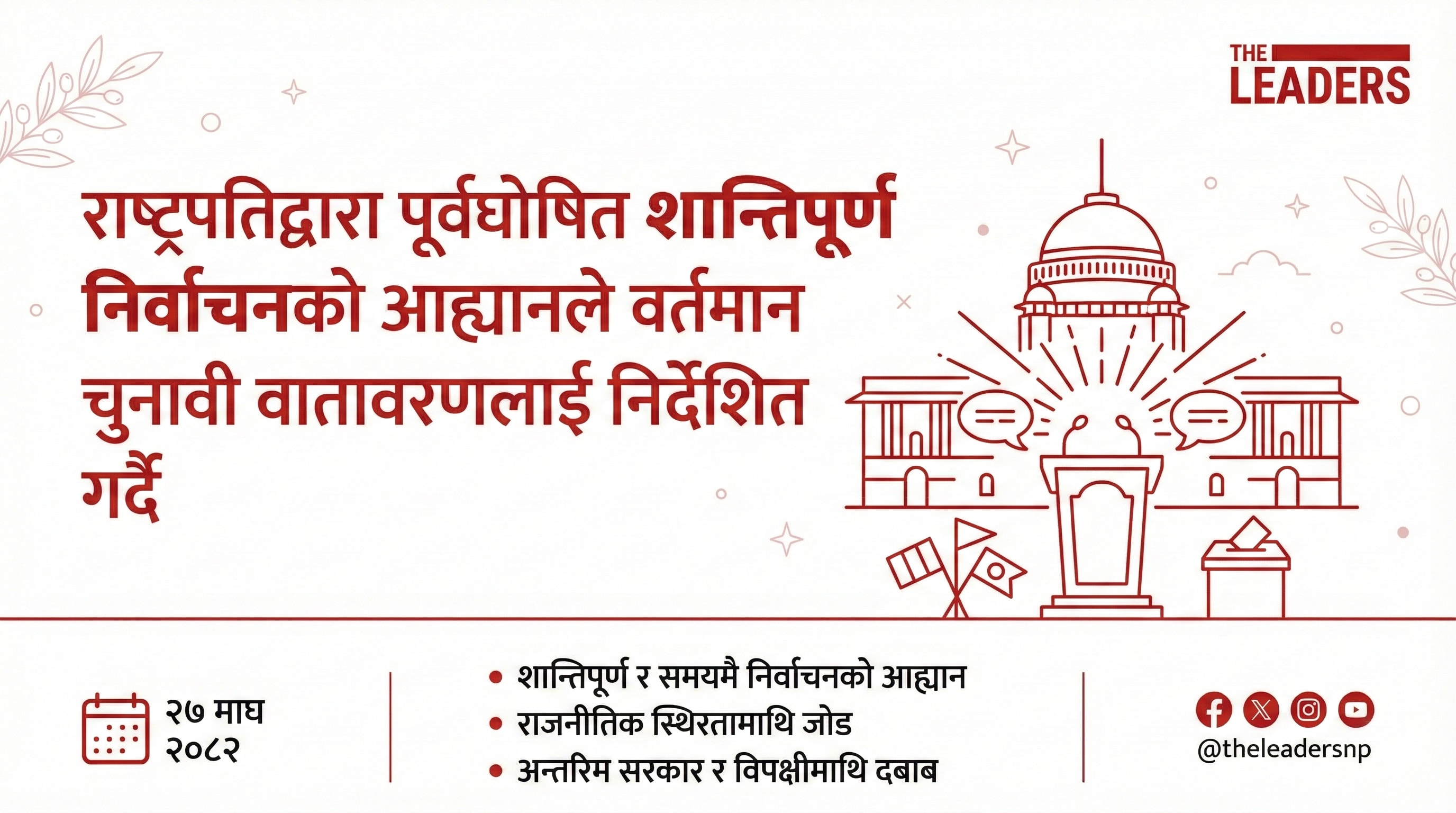
President’s earlier appeal for smooth polls frames current election climate
President Ramchandra Paudel’s earlier calls for a peaceful, timely House of Representatives election on March 5 continue to shape political discourse. Leaders now invoke those appeals as parties and the Election Commission coordinate to maintain stability during the campaign.
Read Full Brief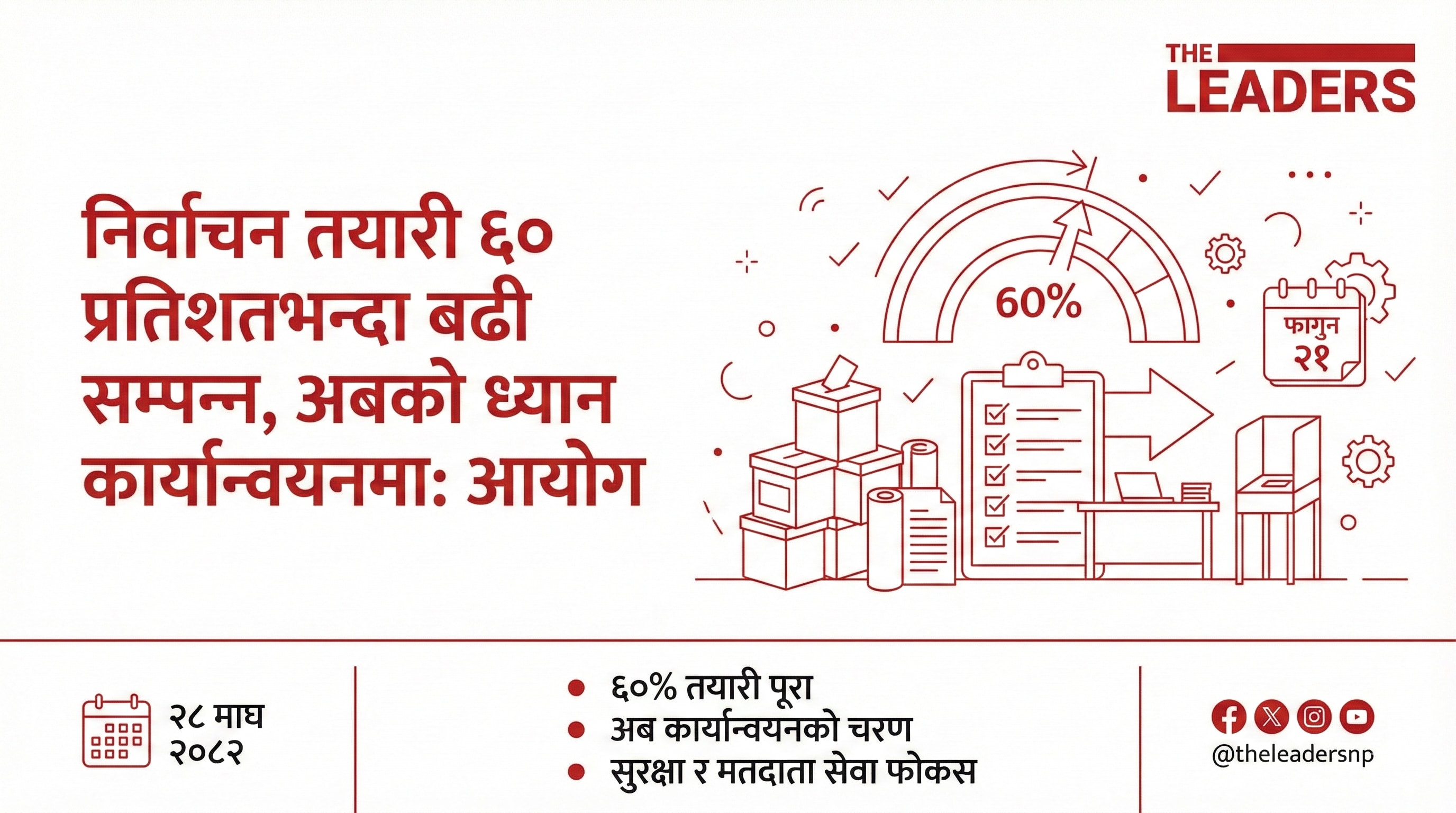
EC says over 60 percent poll preparations complete, focus shifts to execution
The Election Commission has reiterated that more than 60 percent of tasks for the March 5 House of Representatives election are already complete. Officials say managerial planning is done and the focus is now on implementation, security coordination and voter services.
Read Full Brief
EC issues second notice to Balen Shah over code of conduct breach
The Election Commission has served a second clarification notice to Rastriya Swatantra Party leader and Jhapa-5 candidate Balendra Shah over alleged use of police personnel in his campaign. The incident is part of a broader EC crackdown on misuse of state resources ahead of the 2026 polls.
Read Full Brief
Upper House clears key election ordinances for 2026 polls
The National Assembly has unanimously endorsed three election-related ordinances, including amendments to the Voter List and House of Representatives Member Election laws. These legal changes are designed to update procedures ahead of the 5 March 2026 general election.
Read Full Brief
Ballot boxes dispatched to remote districts as March 5 poll nears
The Election Commission has begun dispatching ballot boxes to far-flung districts as part of final logistical preparations for the 5 March 2026 House of Representatives polls. Officials say ballot paper printing has also been expedited to meet tight timelines for the national vote.
Read Full Brief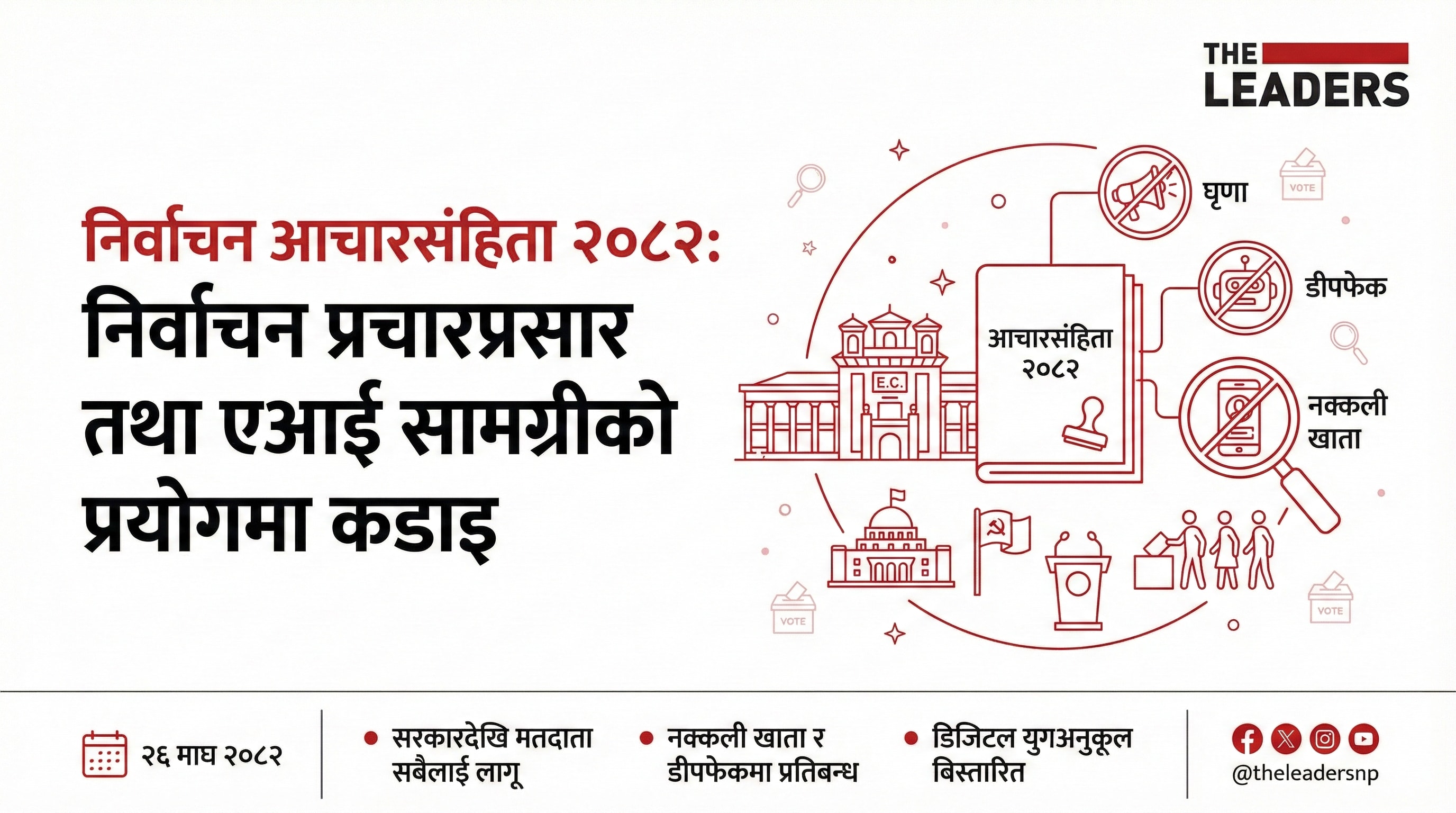
Code of conduct 2082 tightens rules on campaigns and AI content
The Election Code of Conduct 2082, now in force for the March 5 polls, applies to government bodies, parties, candidates, media and voters. It explicitly restricts fake accounts, deepfakes, hate speech and misleading online campaigns, expanding previous rules to fit the digital era.
Read Full BriefFEBRUARY 9, 2026
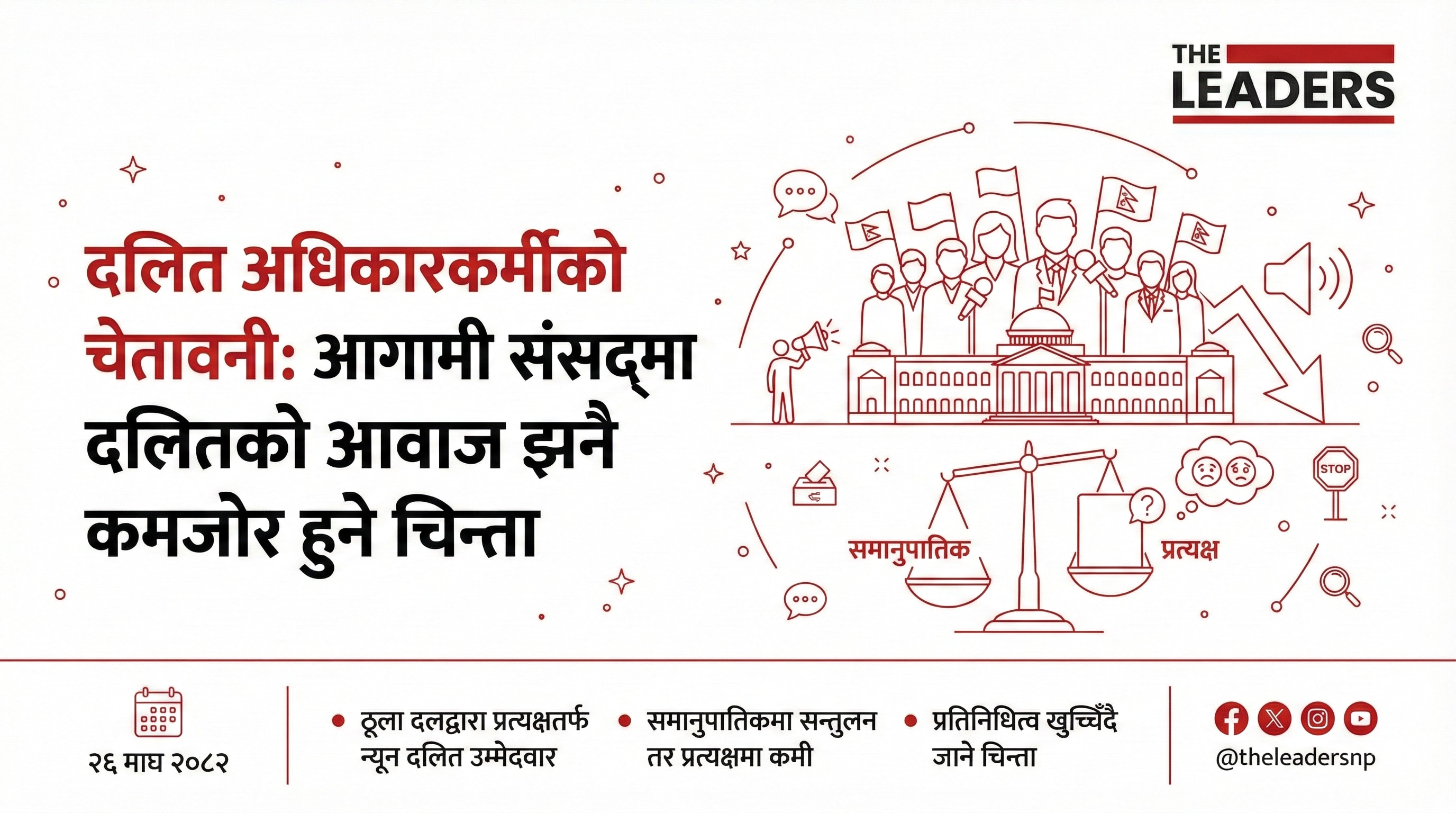
Dalit activists warn of shrinking voice in the next parliament
Analyses of candidate lists suggest that major parties have again fielded very few Dalit candidates in first-past-the-post constituencies. Dalit rights advocates fear that, despite proportional representation provisions, direct representation could shrink further in the upcoming House of Representatives.
Read Full Brief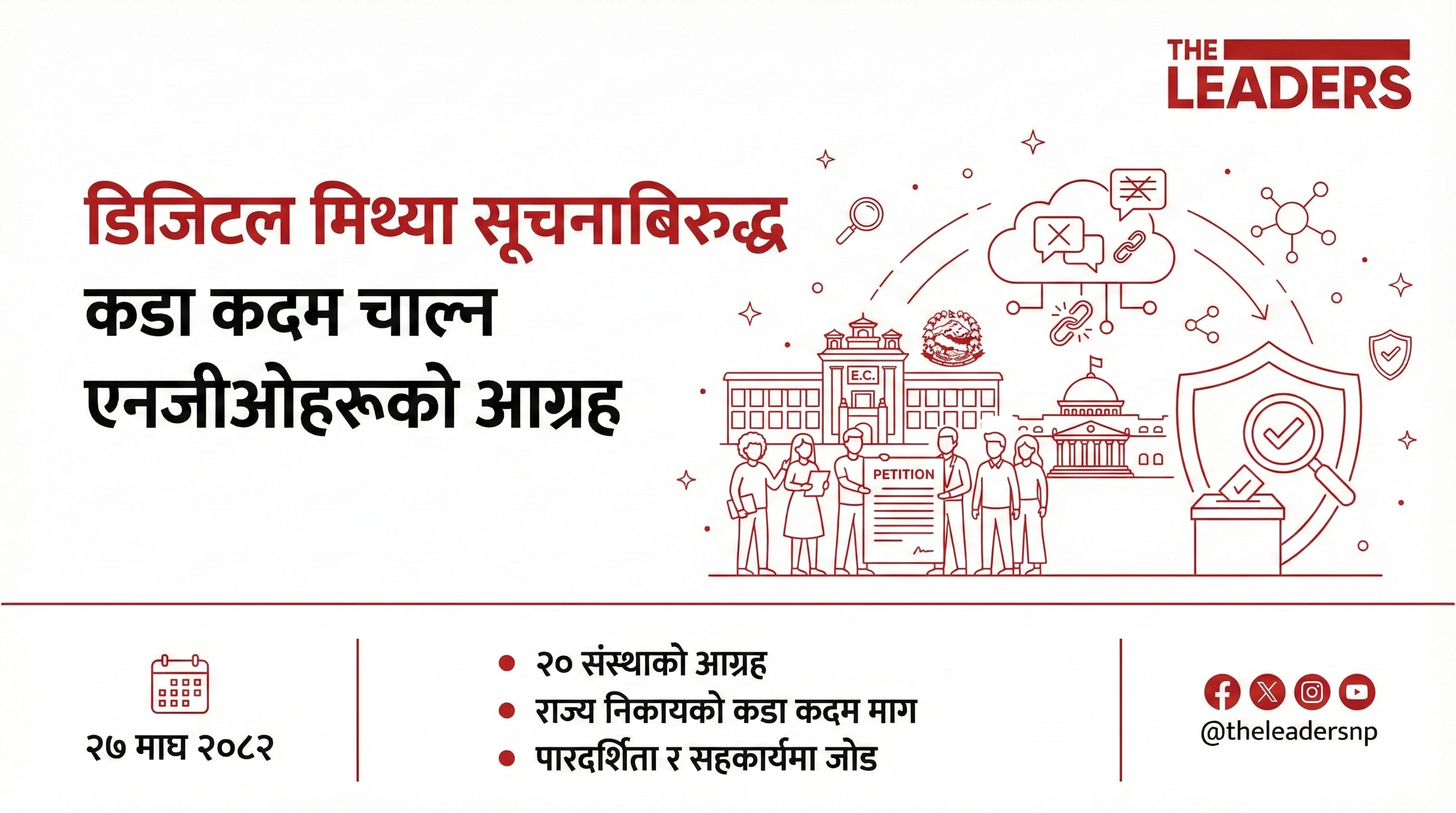
NGOs urge tougher action on digital disinformation
Twenty digital rights and media organisations have called on state bodies to act more decisively against online disinformation targeting the March 5 House of Representatives election. They want the Election Commission and government to improve transparency about problematic content and strengthen coordination with social media platforms.
Read Full Brief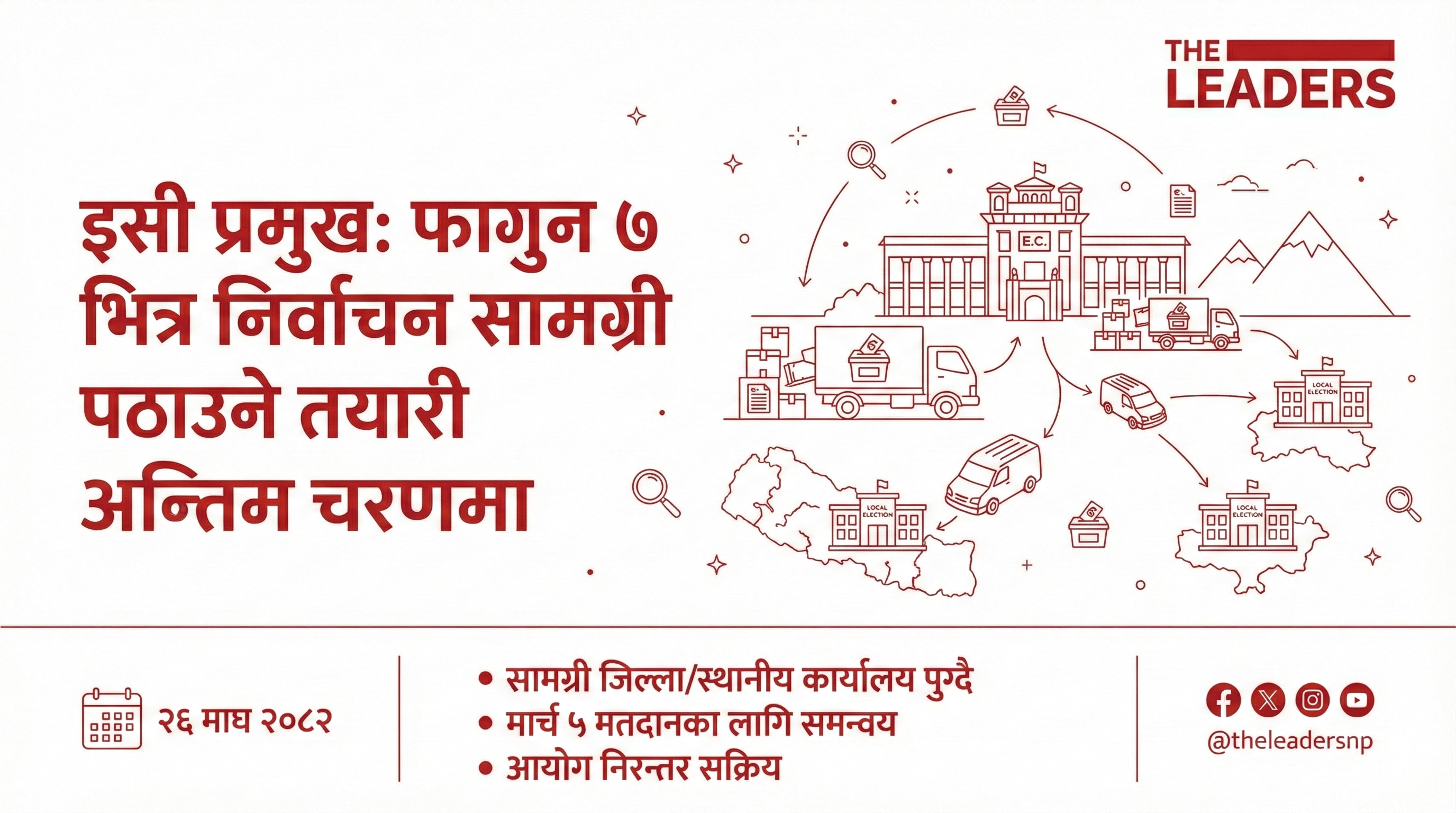
EC chief: logistics on track as materials go out by Feb 19
Acting Chief Election Commissioner Ram Prasad Bhandari says all election materials will be dispatched to district and local offices by February 19. He stressed that the commission cannot relax until voting is completed and highlighted close coordination with security agencies for the March 5 polls.
Read Full Brief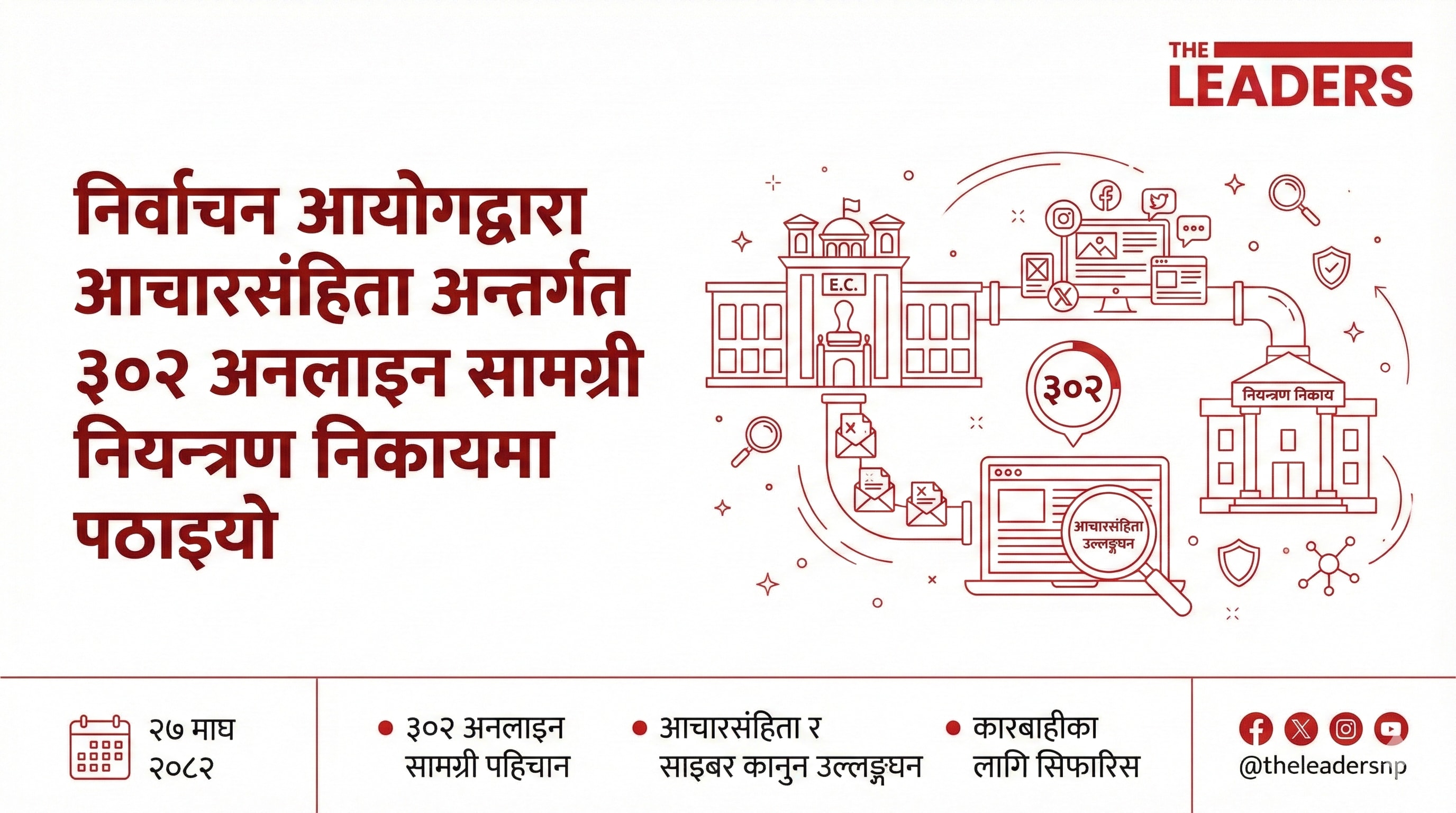
EC flags 302 harmful online posts under new code
The Election Commission’s information integrity unit has identified 302 instances of online content deemed harmful under the election code of conduct and cyber laws. These posts have been forwarded to relevant agencies for action, underscoring tighter scrutiny of digital campaigning ahead of March 5.
Read Full Brief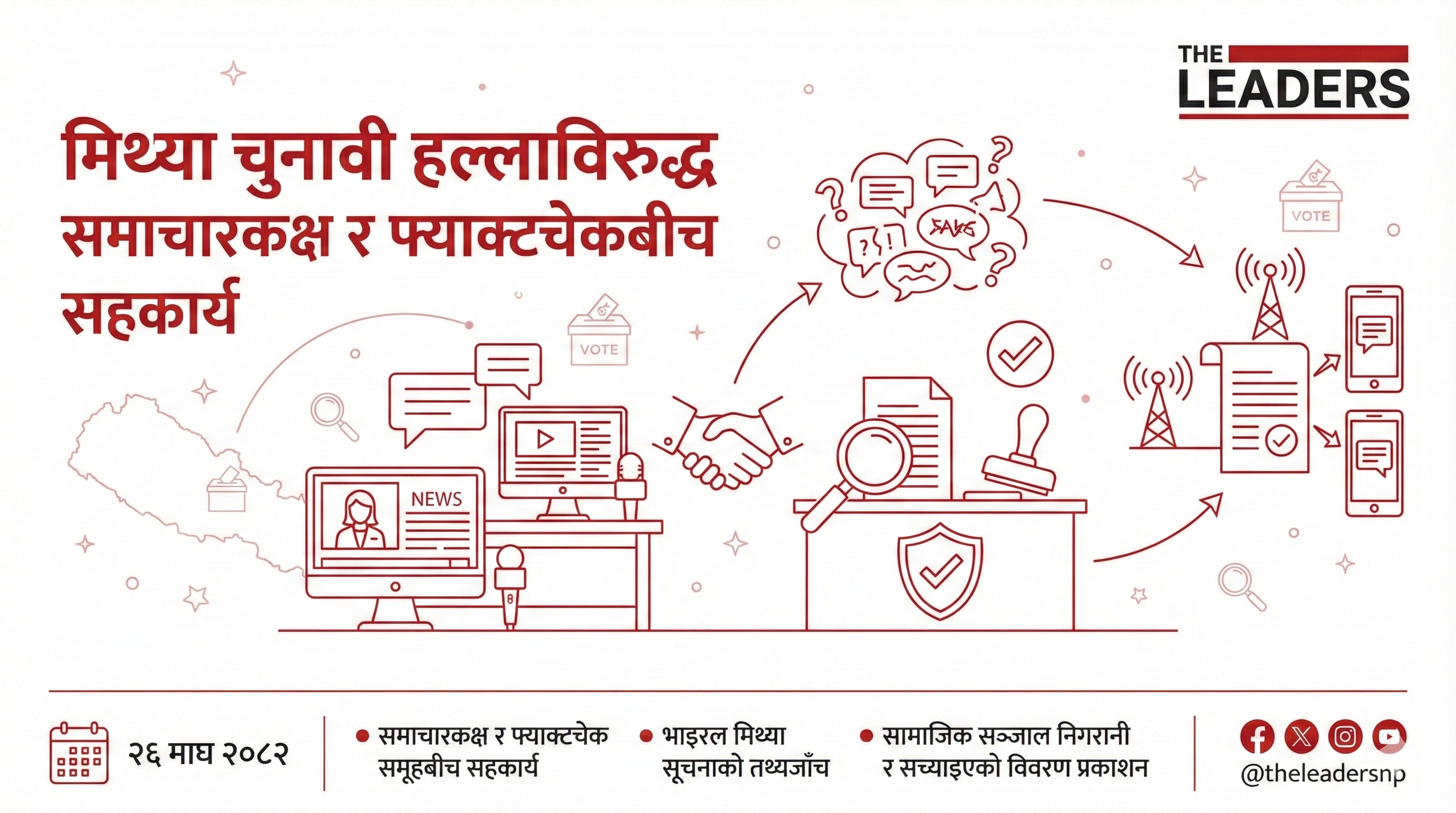
Newsrooms and fact-checkers join hands against viral rumours
Major Nepali newsrooms and independent fact-checking initiatives have formalised collaboration to debunk viral election-related misinformation. The partnerships focus on monitoring social media, verifying fast-spreading claims and publishing corrections in accessible formats.
Read Full Brief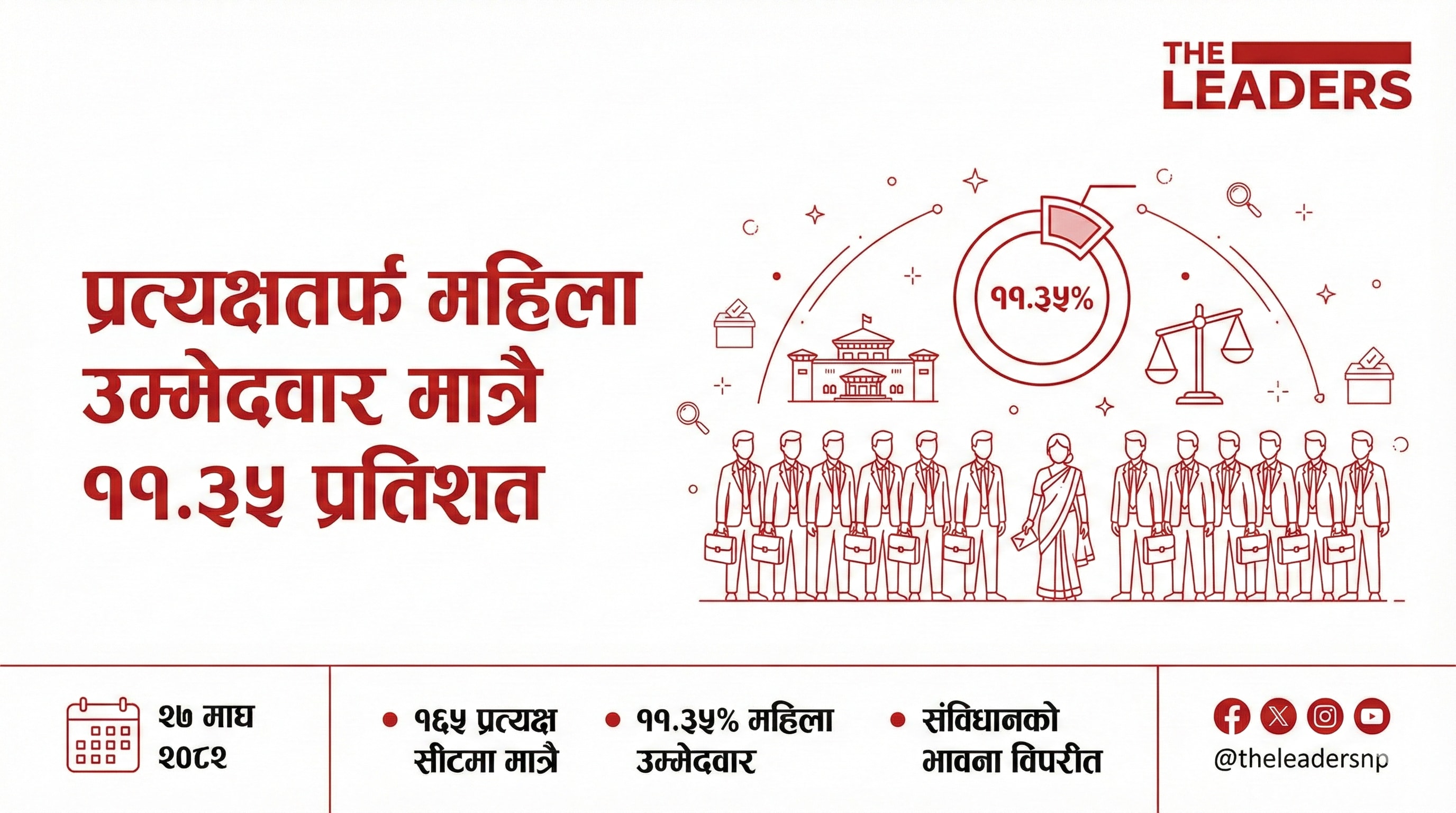
Women remain just 11.35% of direct candidates nationwide
New candidate figures show women make up only 11.35% of those contesting the 165 first-past-the-post seats in the March 5 election. Gender advocates say this falls far short of the spirit of the constitutional one-third representation requirement and renewed Election Commission guidance.
Read Full Brief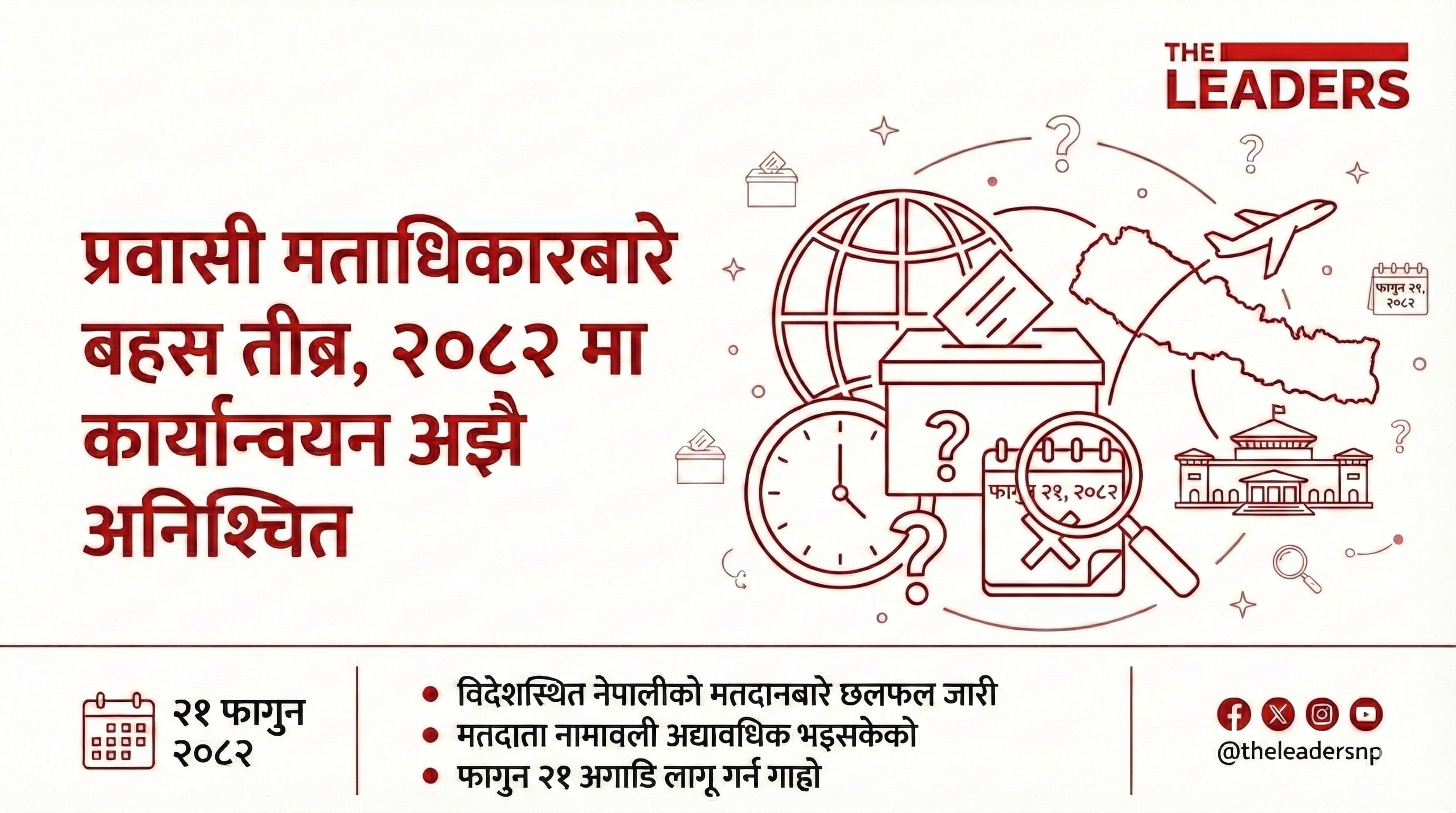
Diaspora voting debate intensifies but remains uncertain for 2026
The government and experts have continued discussions on enabling overseas Nepalis to vote, citing a Supreme Court ruling and policy proposals. Election officials, however, doubt that new arrangements can realistically be implemented before the March 5 polls, as voter registration has already closed.
Read Full Brief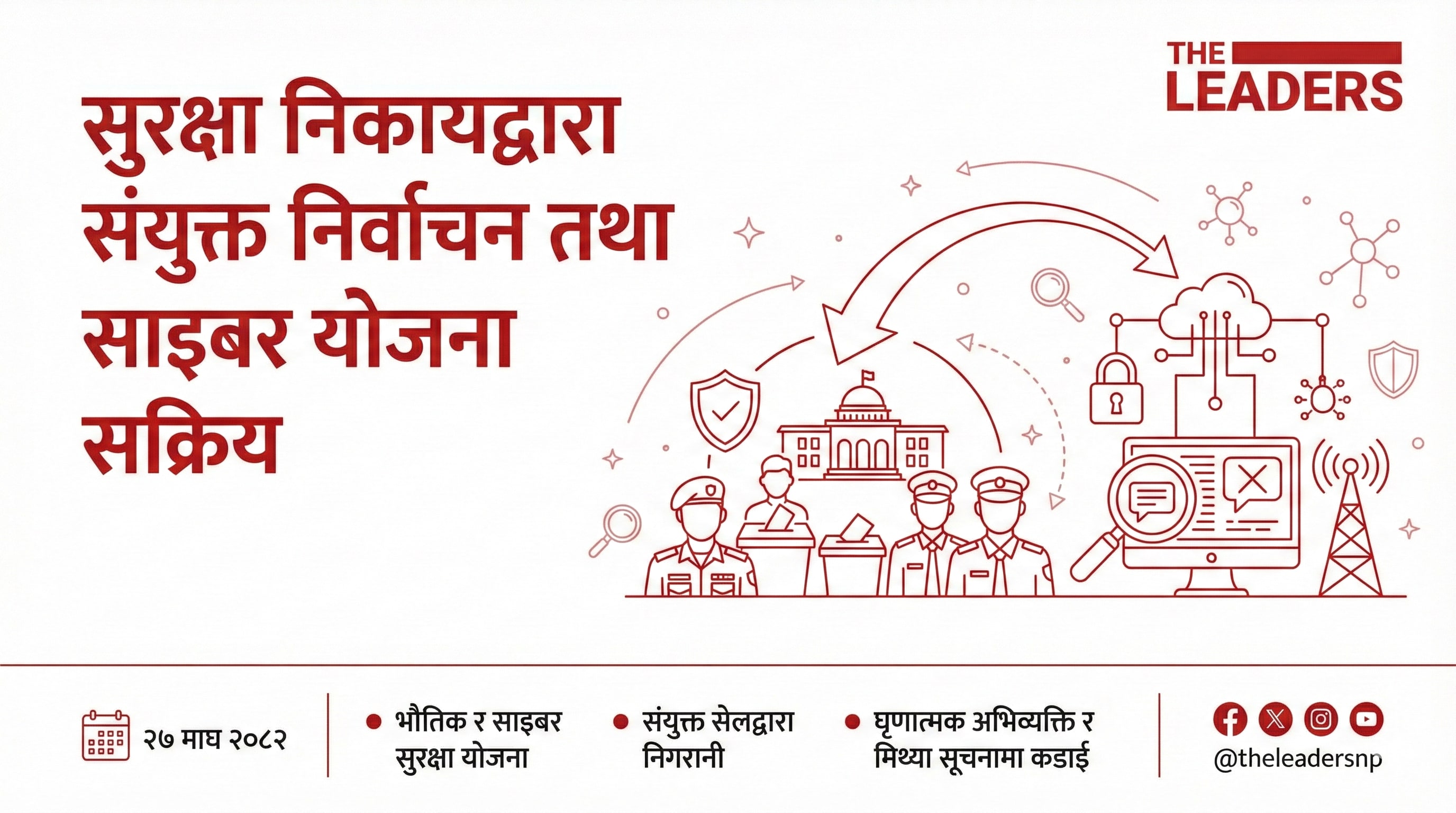
Security agencies activate integrated election and cyber plan
Security agencies have activated an integrated election security plan that covers physical polling security and cyber threats. Joint cells involving the Nepali Army, Nepal Police, Armed Police Force and intelligence agencies are monitoring both offline risks and online hate speech or disinformation.
Read Full Brief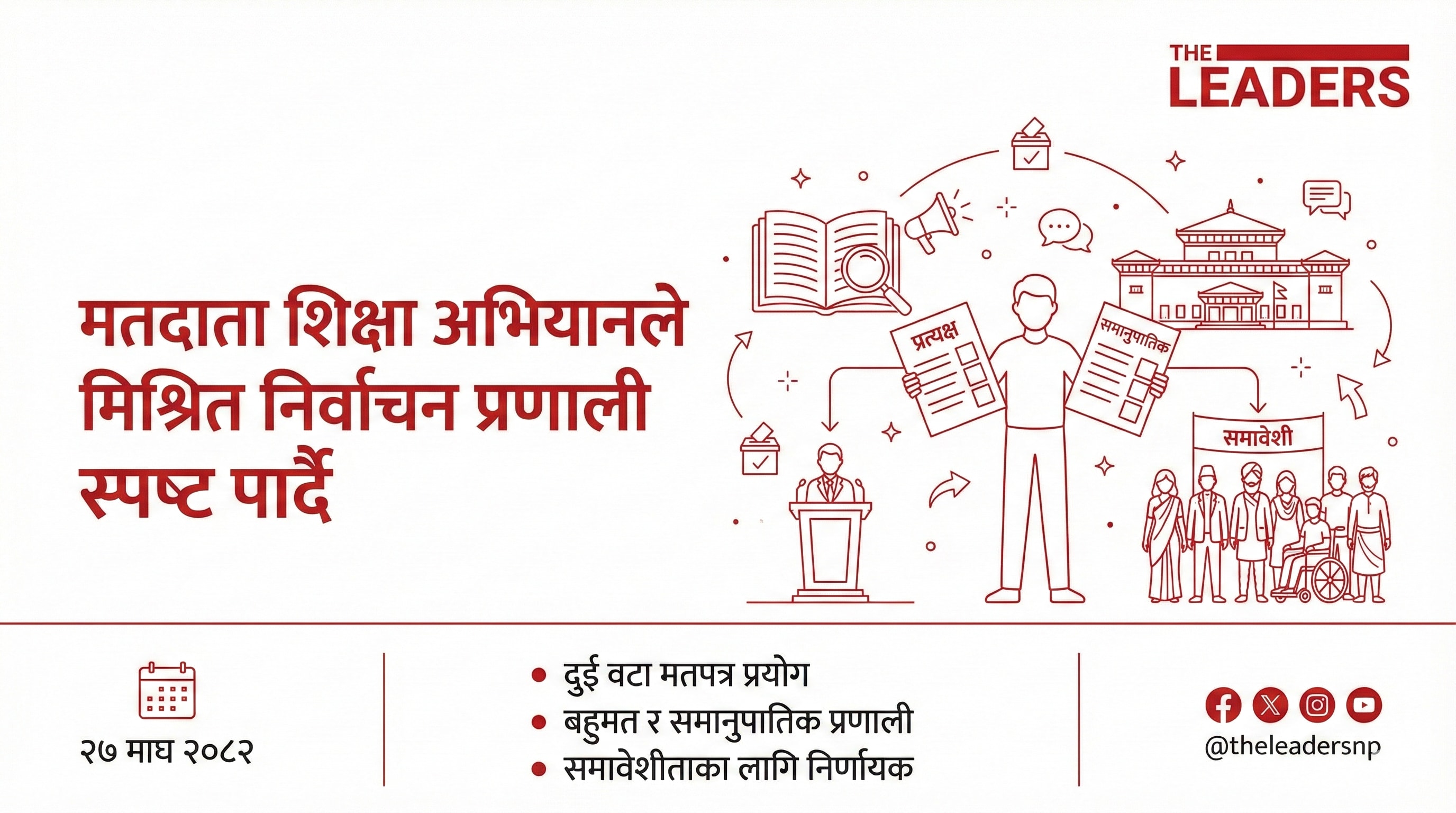
Voter education explains Nepal’s mixed electoral system
Election authorities, media and civil society are intensifying voter education campaigns to explain how first-past-the-post and proportional representation work together in the March 5 election. Materials emphasise that voters will cast two ballots and that proportional lists are key for inclusion.
Read Full BriefMedia urged to avoid sensationalism under election code
With the code of conduct in force, the Press Council and Election Commission have reminded media houses to avoid unverified, defamatory or inflammatory coverage. Monitoring data show warnings have already been issued to several outlets over election-period content.
Read Full BriefFEBRUARY 8, 2026
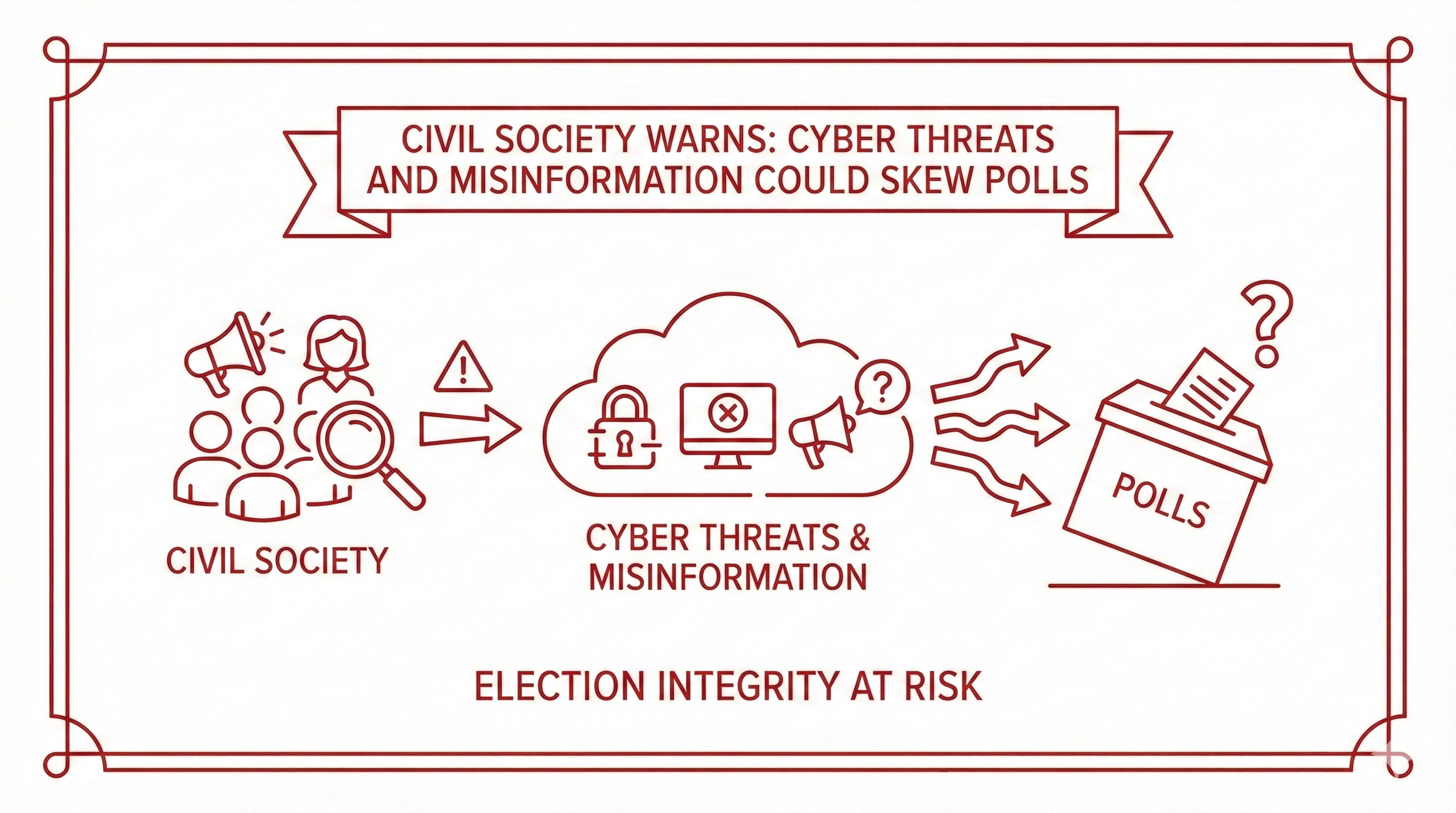
Civil society warns cyber threats and misinformation could skew polls
Twenty rights and civic groups have warned that organised online misinformation and cyber threats pose serious risks to the credibility of the March 5 election. They call for shared tools to track false content and stronger coordination with the EC.
Read Full Brief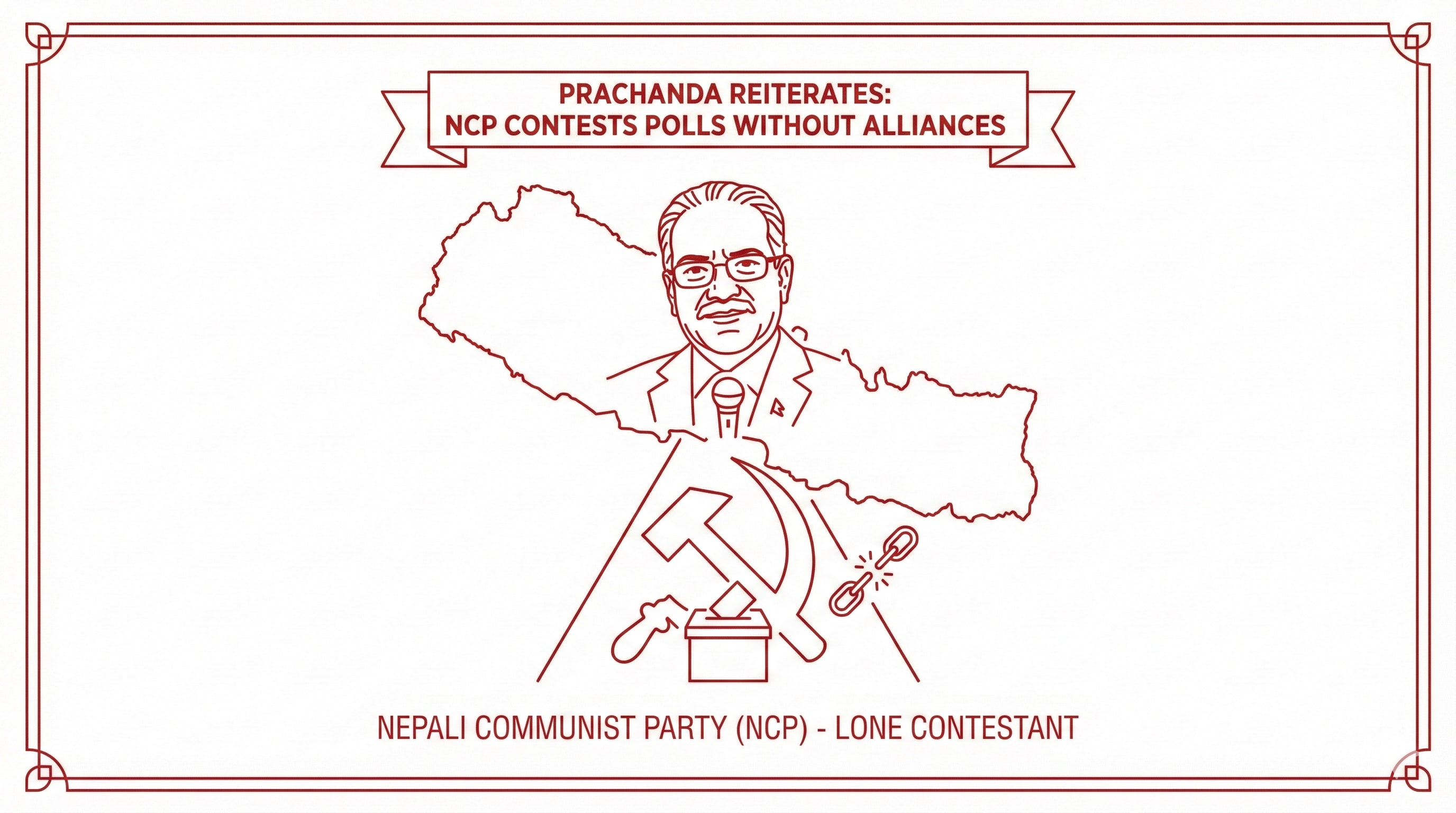
Prachanda reiterates: Nepali Communist Party to contest polls without alliances
Nepali Communist Party coordinator Pushpa Kamal Dahal 'Prachanda' has again ruled out electoral alliances for the March 5 HoR election. His stance contrasts with past experiments in left unity and ongoing speculation about deals with the UML.
Read Full Brief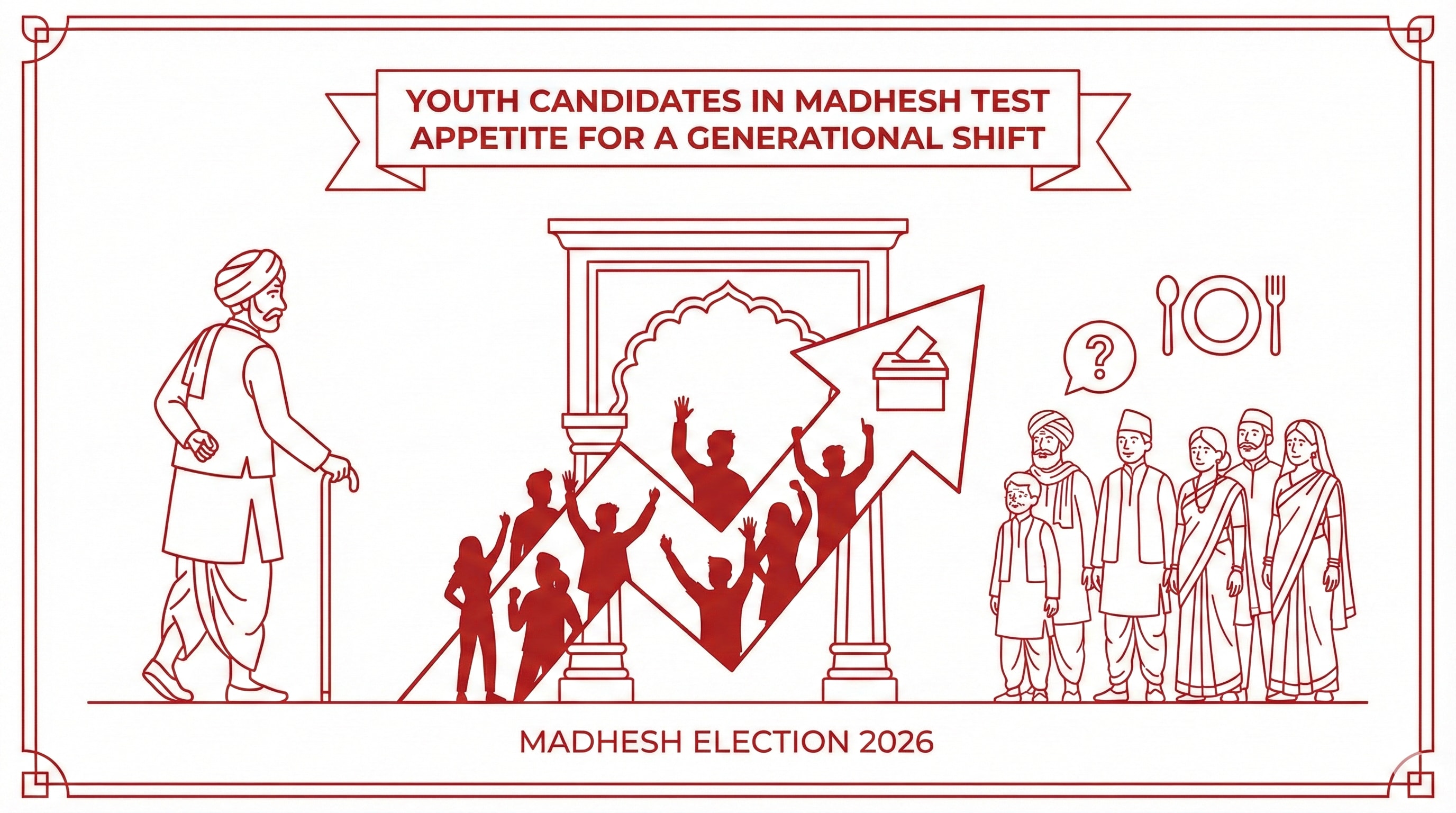
Youth candidates in Madhesh test appetite for a generational shift
Data from Madhesh Province show dozens of Gen‑Z candidates contesting FPTP seats in the March 5 election, many as independents. The surge highlights both demand for a new political style and the persistence of gender and resource gaps.
Read Full Brief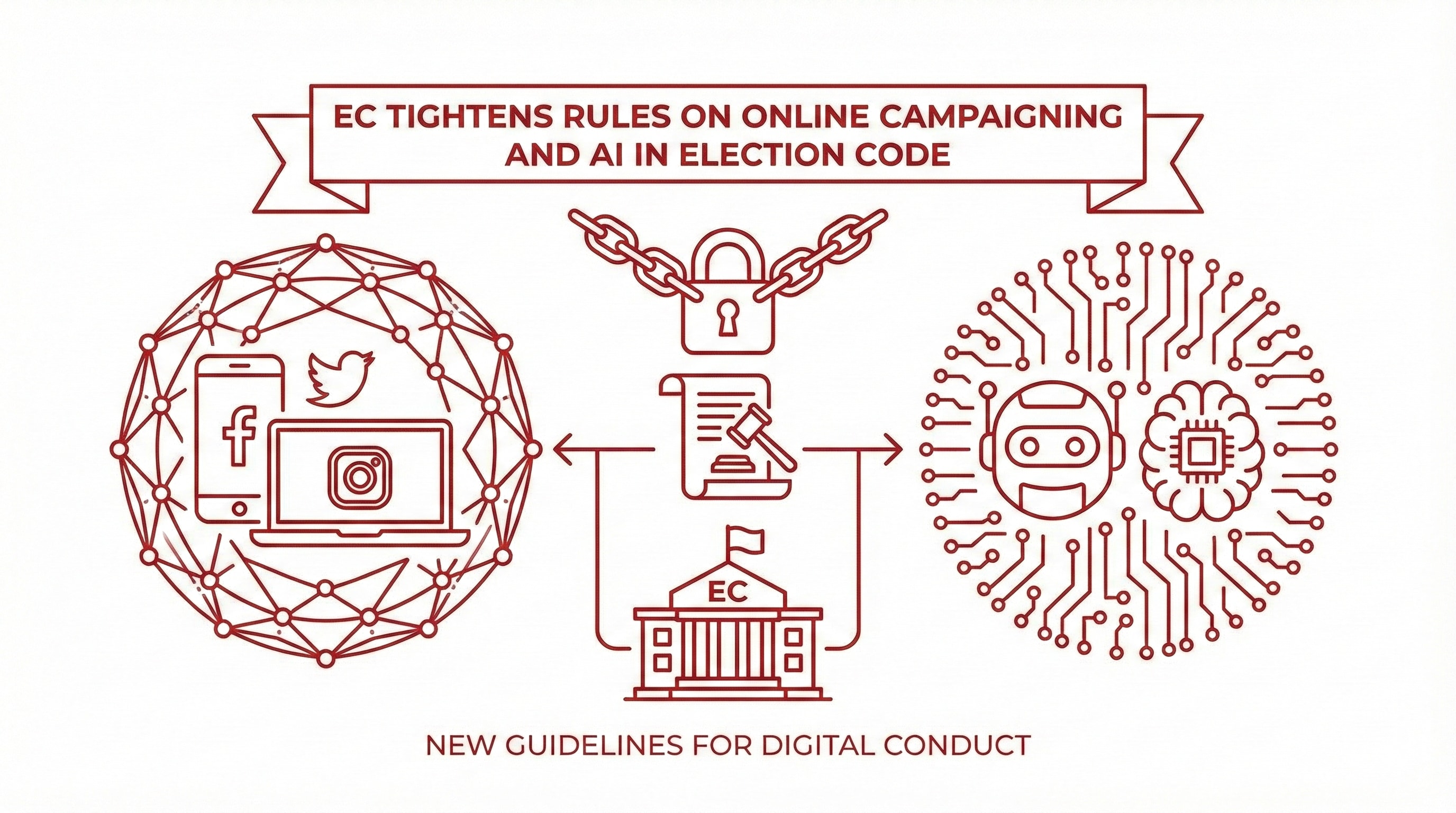
EC tightens rules on online campaigning and AI in election code
New provisions in the Election Code of Conduct 2082 require online campaigning costs to be reported and extend restrictions to social media and AI‑driven content. The rules aim to close loopholes that previously allowed opaque digital spending.
Read Full Brief
Observers accredited as EC bets on transparency to build trust
The Election Commission has approved 40 organisations, including several international groups, to observe the March 5 HoR election. The decision, taken in early January, is now feeding into observer deployments and voter education.
Read Full Brief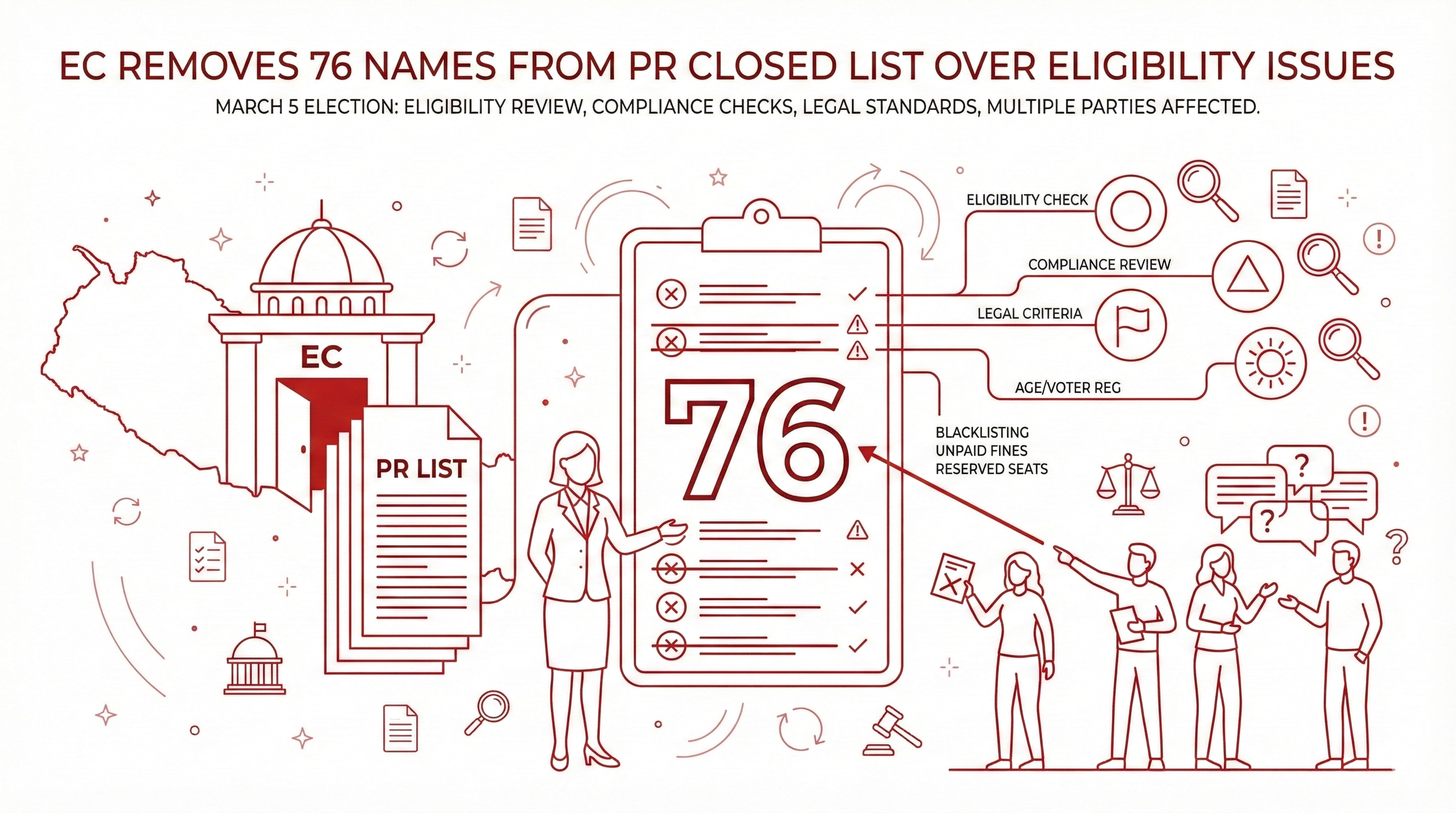
EC removes 76 names from PR closed list over eligibility issues
The Election Commission has struck 76 candidates from parties' proportional representation (PR) closed lists for the March 5 House of Representatives election. The decision follows complaints, legal checks and coordination with agencies such as the Credit Information Center.
Read Full Brief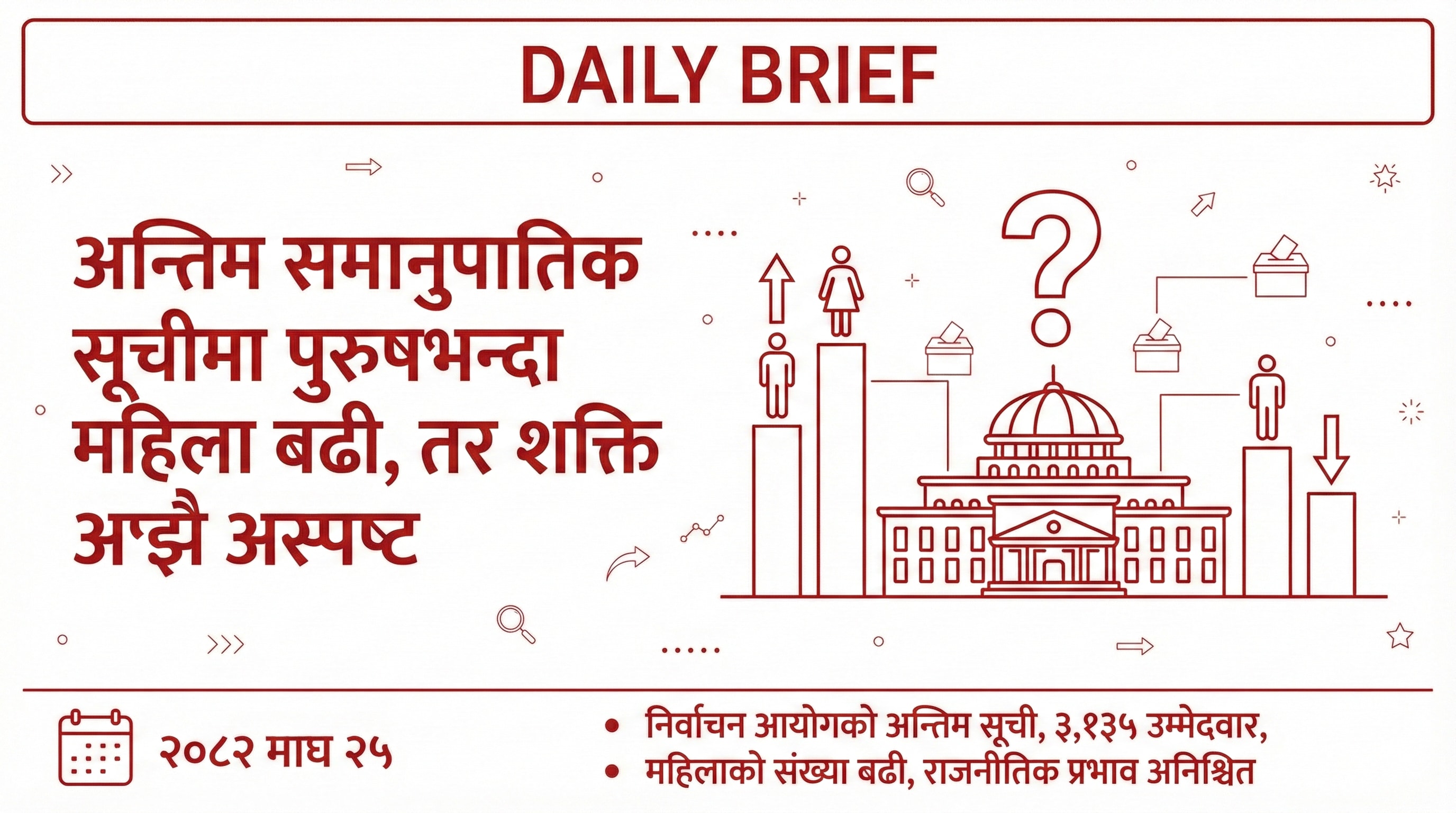
Final PR list features more women than men, but power still unclear
The EC's final proportional representation list for the March 5 HoR election includes 3,135 candidates, with women slightly outnumbering men. Parties and analysts are divided on whether this signals deeper change in who actually gets winnable positions.
Read Full Brief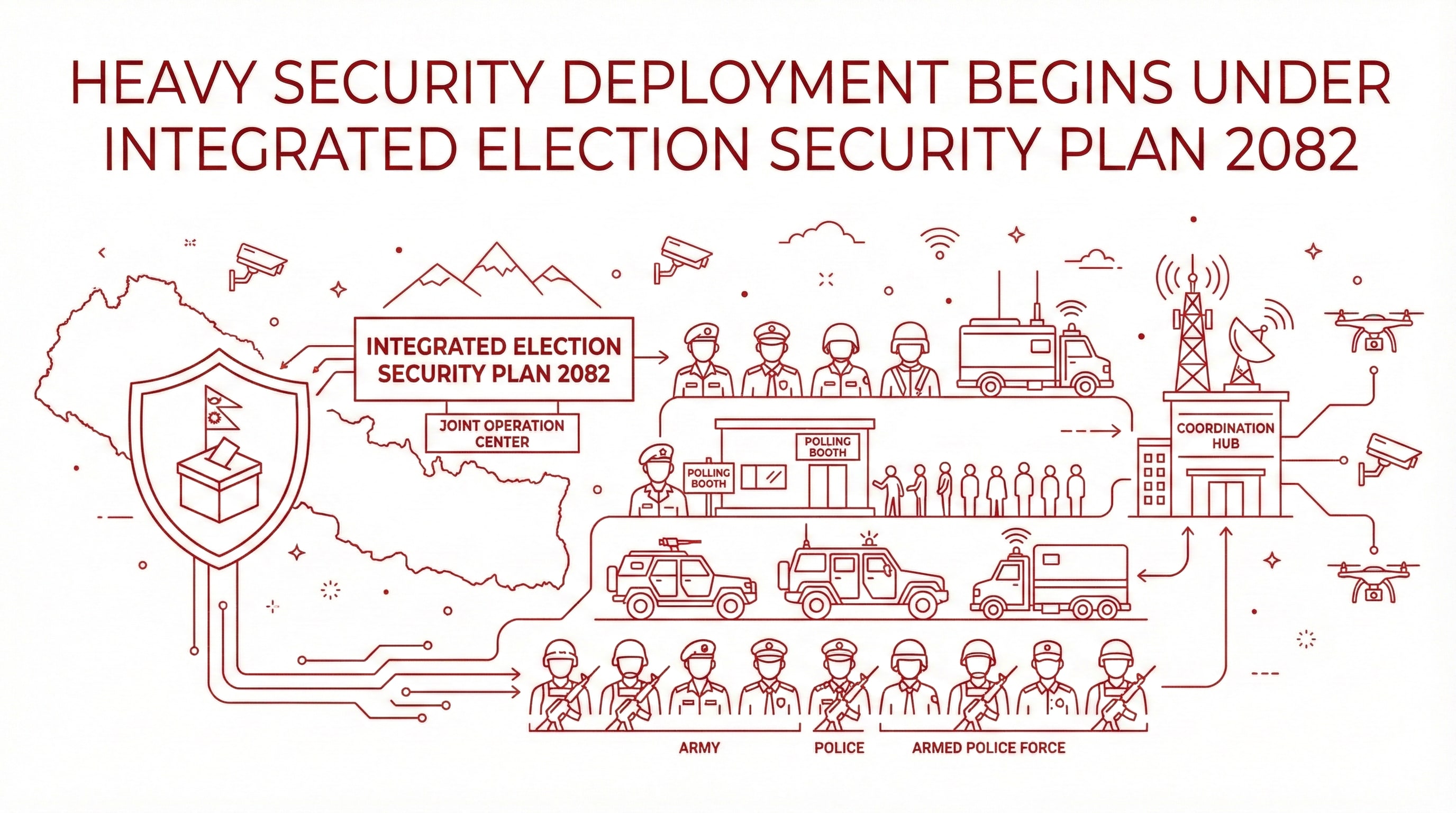
Heavy security deployment begins under Integrated Election Security Plan 2082
Security agencies have started nationwide deployment for the March 5 HoR election under the Integrated Election Security Plan 2082. Around one-third of the country's 10,967 polling stations have been classified as highly sensitive.
Read Full Brief
EC escalates code of conduct enforcement with more clarifications
The Election Commission has sought explanations from several candidates, officials and organisations over alleged violations of the Election Code of Conduct 2082. Cases range from hate speech and misuse of state positions to controversial social media content.
Read Full Brief
Kathmandu election office flags breaches of voter secrecy on social media
The District Election Office Kathmandu has objected to political actors and media content that risk exposing individual voter preferences. Officials link early propaganda and data misuse to violations of the Election Code of Conduct 2082.
Read Full BriefFEBRUARY 6, 2026
EC seeks second clarification from Balen over alleged police campaigning
The Election Commission has asked Rastriya Swatantra Party candidate Balendra Shah (Balen) in Jhapa-5 to submit a second clarification for alleged misuse of plainclothes police in his campaign. The move signals tighter enforcement of the Election Code of Conduct, 2082, less than a month before the March 5 House of Representatives vote.
Read Full Brief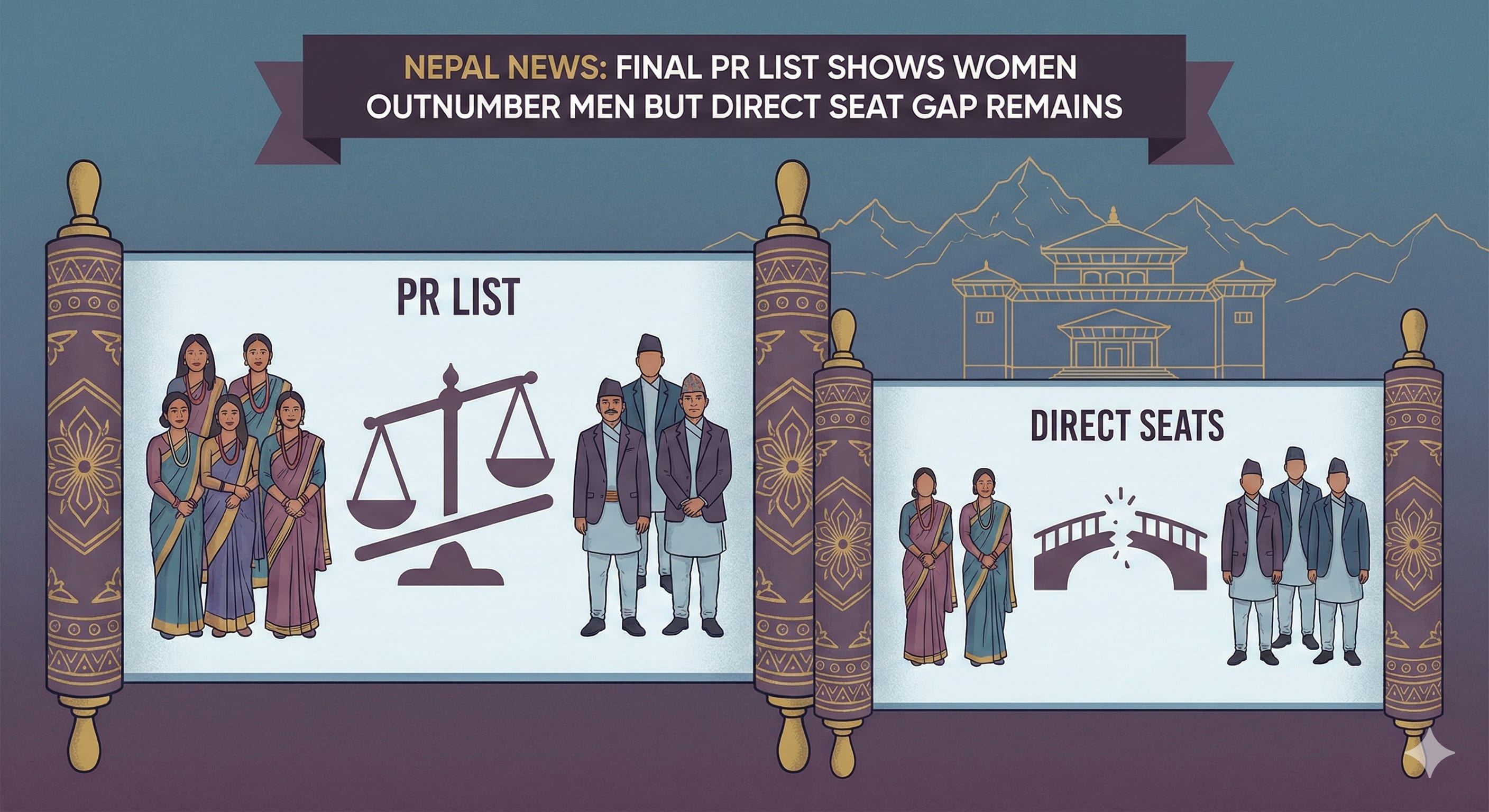
Final PR list shows women outnumber men but direct seat gap remains
The Election Commission has published the final closed list for proportional representation, with 1,772 women and 1,363 men among 3,135 candidates. While this supports the constitutional one-third requirement, it contrasts sharply with low numbers of women in direct contests.
Read Full Brief
Rastriya Swatantra Party faces scrutiny over candidate selection and conduct
The Rastriya Swatantra Party, which rose on an anti-establishment message in 2022, is now under scrutiny for how it selected candidates and handled internal primaries. Critics also point to code of conduct issues and the use of money in its internal processes.
Read Full Brief
Sunsari nominations expose weak representation of women candidates
Election data from Sunsari district show that only 19 of 108 House of Representatives candidates are women. Major parties have fielded very few women under the direct system, highlighting a gap between constitutional ideals and party practices.
Read Full Brief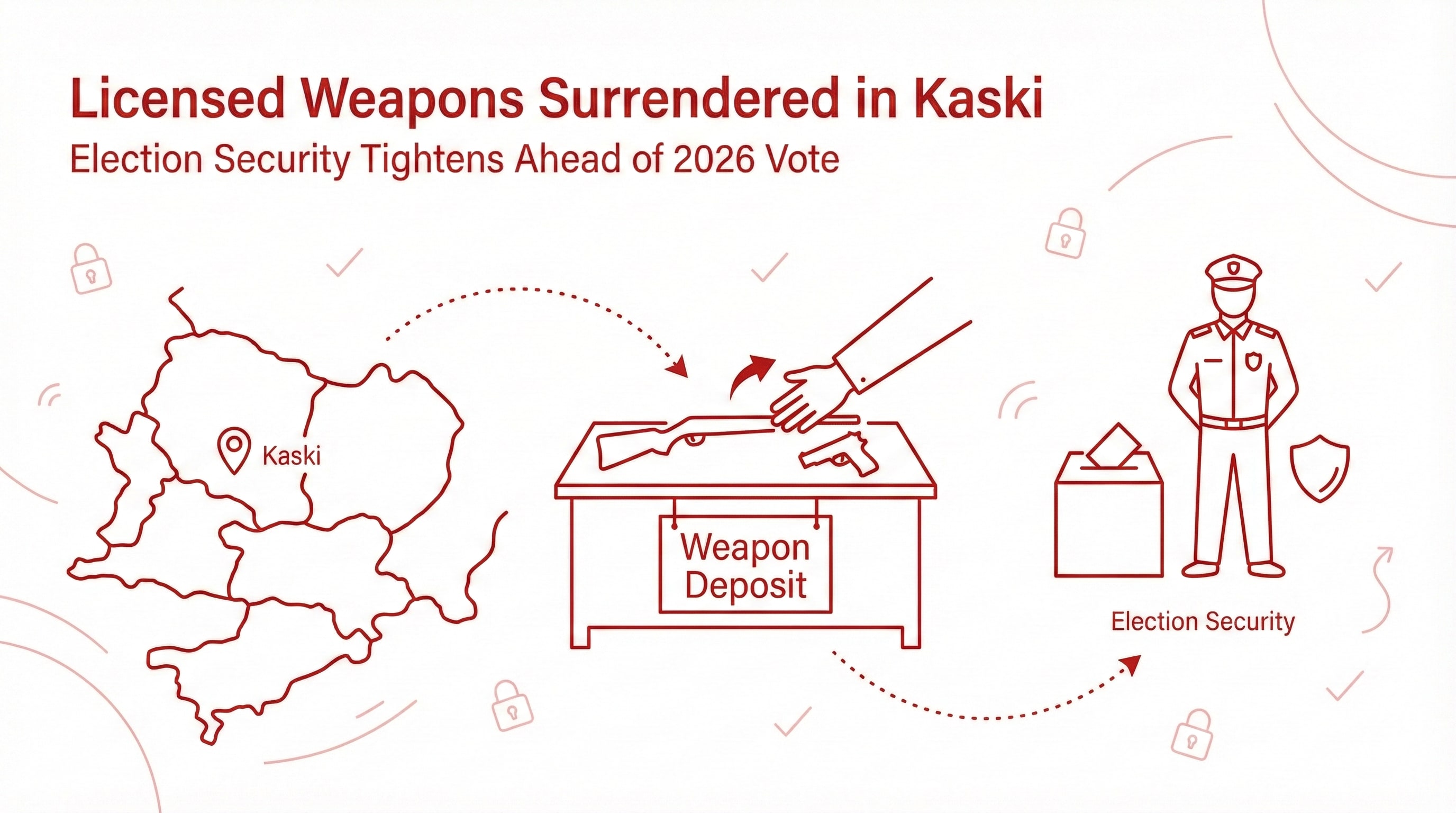
Licensed weapons surrendered in Kaski as election security tightens
Authorities in Kaski district report that 77 licensed weapons have been surrendered following a public notice ahead of the March 5 polls. Local officials say the move is part of efforts to ensure a fear-free voting environment under the national security plan.
Read Full Brief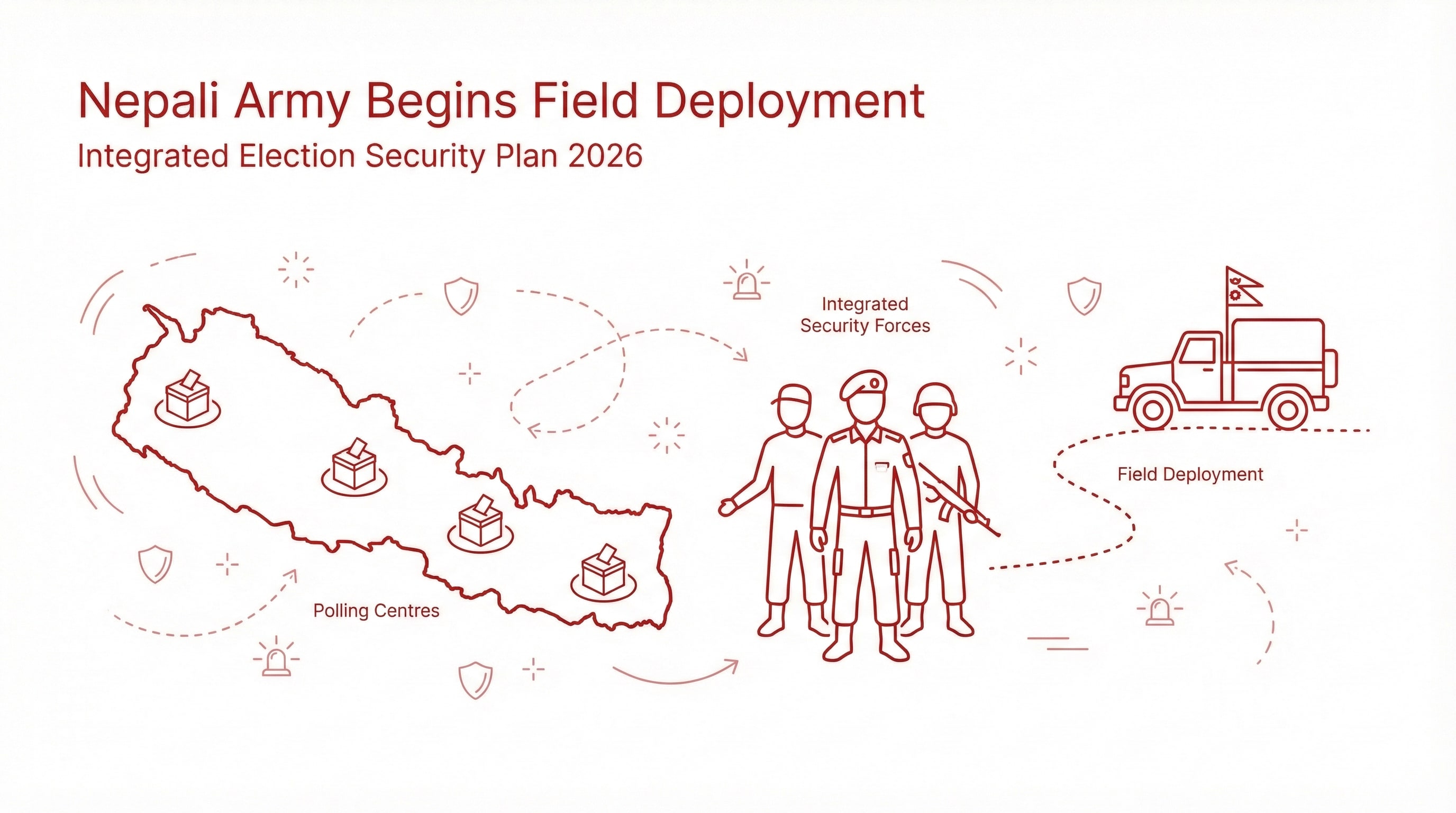
Nepali Army begins field deployment under integrated election security plan
From February 4, nearly 80,000 Nepali Army personnel have begun field deployment as part of a 338,000-strong security plan for the March 5 polls. The army will form the outer layer in a three-tier security structure around polling centres and key sites.
Read Full Brief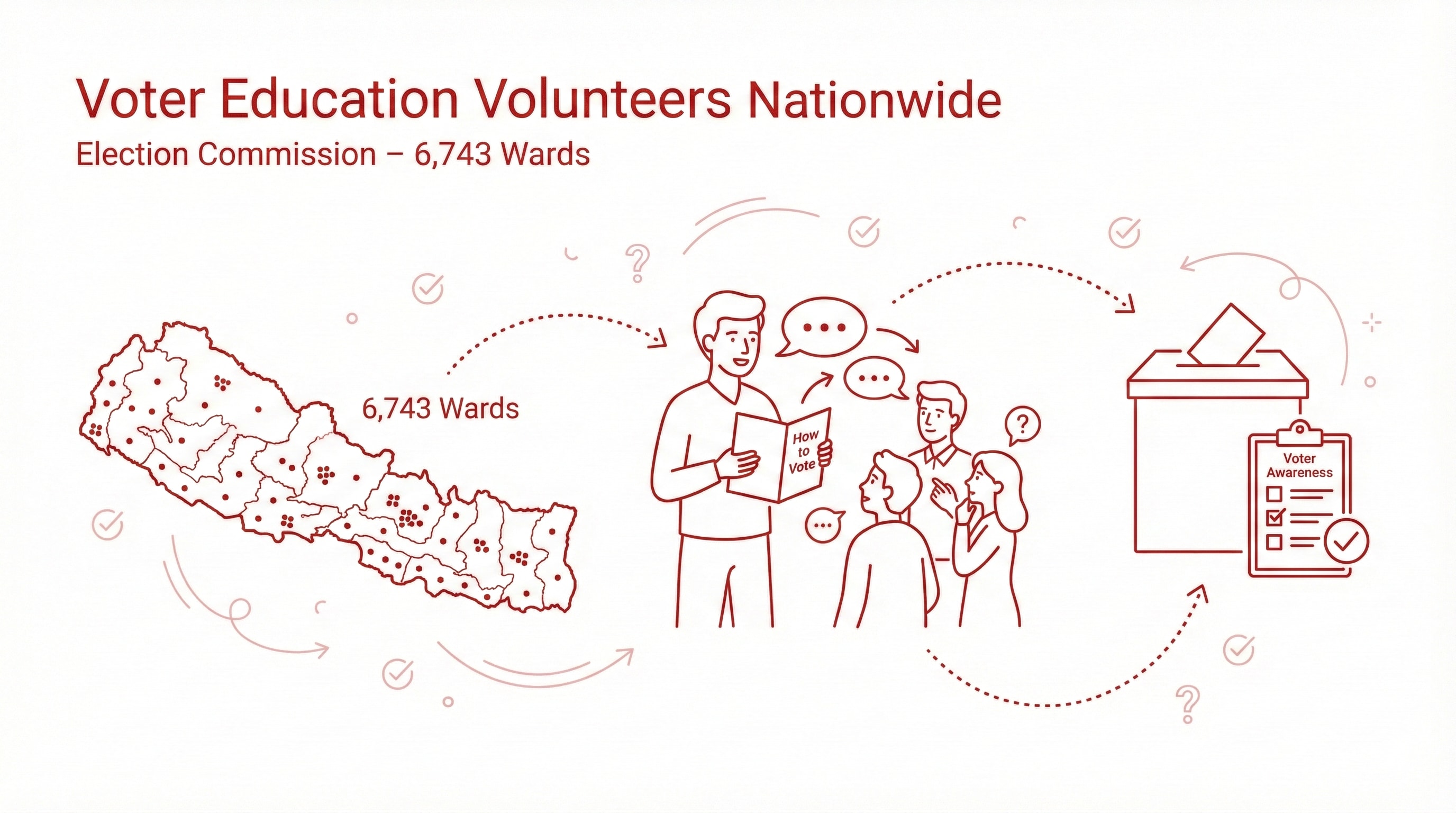
EC to deploy voter education volunteers in all 6,743 wards
The Election Commission will deploy voter education volunteers in all 6,743 wards across Nepal ahead of the March 5 election. The programme aims to reduce invalid ballots and reach women and marginalised communities through local facilitators.
Read Full Brief
NHRC warns against hate speech and digital abuses in election campaign
The National Human Rights Commission has raised alarm over rising hate speech, misuse of digital technology and violations of voter privacy during early campaigning. It has urged parties and candidates to respect the Election Code of Conduct and avoid practices that could undermine the secrecy and freedom of the vote.
Read Full Brief
EC widens code of conduct crackdown with 30-plus clarification notices
Since enforcing the Election Code of Conduct on January 18, the Election Commission has sought clarifications from over 30 candidates, parties, agencies and organisations. Recent notices highlight concerns about hate speech, misuse of state resources and divisive social media content ahead of the March 5 polls.
Read Full Brief
EC and TikTok sign MoU to curb election misinformation
The Election Commission of Nepal has signed a memorandum of understanding with TikTok to cooperate against misleading and harmful content ahead of the 5 March 2026 House of Representatives election. The deal includes free support from TikTok to amplify official information and run an election integrity workshop for EC officials.
Read Full Brief