
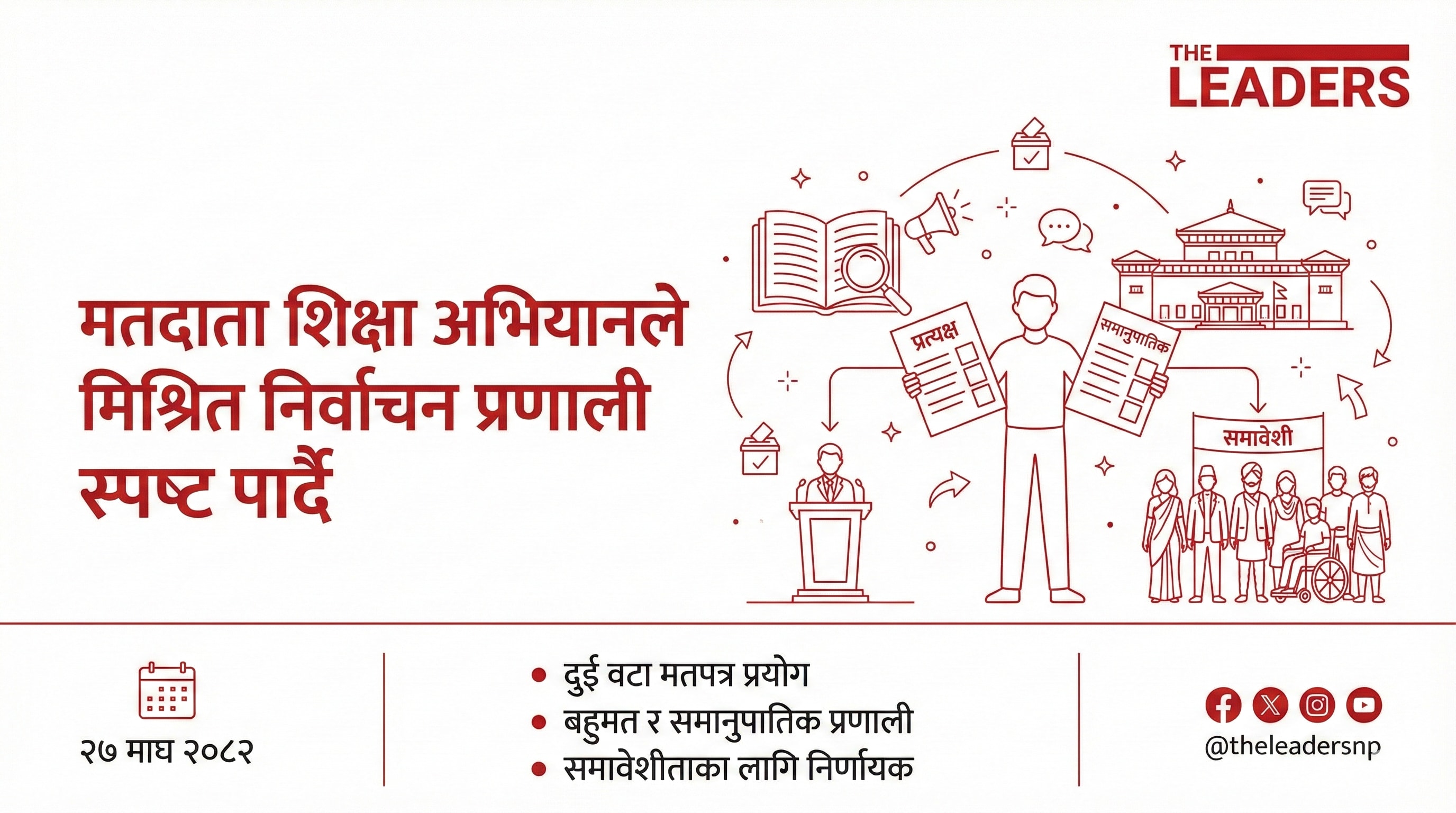
Two ballots, one parliament
Voter education content circulated through radio, local meetings and online explainer pieces is reminding citizens that they will vote twice on March 5: once for a candidate in their constituency under the first-past-the-post system, and once for a political party under proportional representation.
Explainers clarify that 165 MPs will be elected directly from constituencies and 110 will be chosen from party lists based on the nationwide proportional vote. Parties must use their lists to meet constitutional requirements on women and representation of historically marginalised groups.
Focus on inclusion and code of conduct
Campaigns also highlight that inclusion depends heavily on how parties design and later fill their proportional lists, especially when direct candidacy for women and Dalits remains low. Voters are being encouraged to look at party commitments on inclusion, governance and accountability when choosing their proportional ballot.
At the same time, the EC and educators are reminding citizens that the election code of conduct also applies to voters. Sharing unverified rumours, intimidating others at polling stations or photographing marked ballot papers can all lead to investigation and penalties.