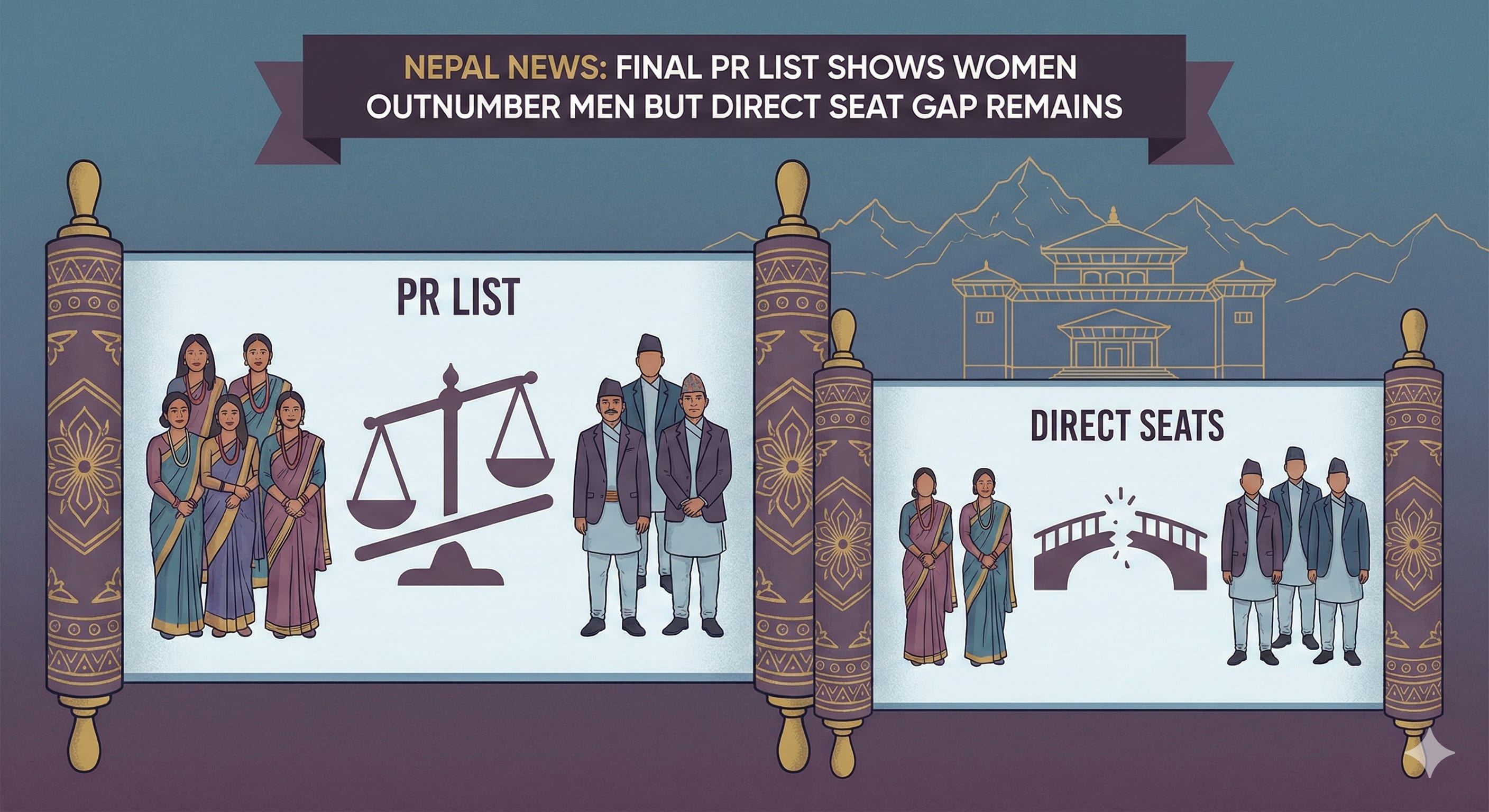
International and regional broadcasters, citing Election Commission data, report that the final proportional representation (PR) candidate list for the March 5 House of Representatives election includes 3,135 candidates from 63 parties, contesting under 57 election symbols. Of these candidates, 1,772 are women and 1,363 are men, meaning women slightly outnumber men on the closed lists.
This configuration reflects constitutional rules that require women to hold at least one-third of the seats in the federal parliament when FPTP and PR seats are combined. Parties have more direct control over compliance through the PR lists, where they can balance gender, caste, ethnicity, region and other categories on paper.
However, as district examples like Sunsari show, women's presence in the FPTP races remains weak. Rights groups and women's networks have highlighted this gap in recent dialogues and petitions, arguing that over-reliance on PR seats can relegate women to less visible roles and weaken their direct accountability links with constituencies.
For voters, the contrast between PR lists and direct race line-ups is a reminder to look beyond headline numbers. A parliament that nominally meets the one-third requirement can still reproduce old patterns if women, Dalits, Madhesis or other marginalised communities are concentrated in particular electoral tiers or regions rather than participating across the full spectrum of competition.