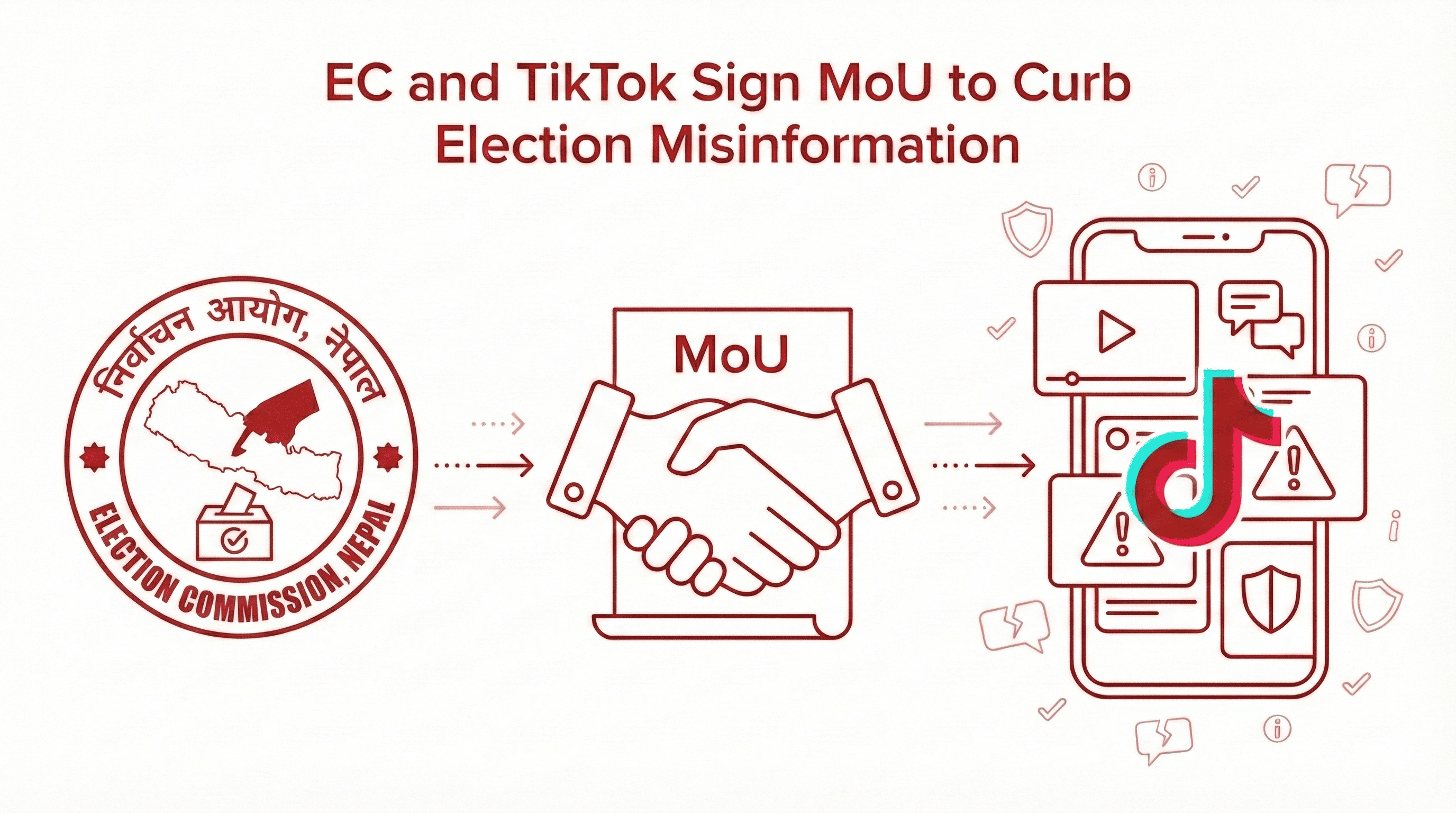
The Election Commission of Nepal (ECN) has entered into a formal partnership with TikTok to address misinformation and harmful political content during the 5 March 2026 House of Representatives election. The memorandum of understanding was exchanged this week in Kathmandu by EC Joint Secretary and spokesperson Narayan Prasad Bhattarai and TikTok's Head of Public Policy and Government Relations Ferdous Al Mottakin, in the presence of Acting Chief Election Commissioner Ram Prasad Bhandari. According to reports in The Himalayan Times, The Rising Nepal, myRepublica and technology outlet Nepalitelecom.com, TikTok will provide free support to promote verified election information, run an election integrity workshop for EC staff, and fast-track the removal of content that violates Nepali law or the election code of conduct. EC officials say the agreement is designed to complement the Election Code of Conduct, 2026, which already restricts false online propaganda and hate speech, but they also acknowledge that enforcement will depend on how quickly abusive content is reported and processed on a fast-moving platform widely used by young voters. For voters, the MoU signals that at least some of the political videos they see on TikTok during the campaign will be subject to closer scrutiny, yet questions remain about consistency, transparency of takedown decisions, and the risk that over-removal could also suppress legitimate criticism.
Daily Intelligence
EC and TikTok sign MoU to curb election misinformation
Date:
•Tags:
Election 2026/2082PoliticsMisinformationDigital PlatformsECN
Summary
The Election Commission of Nepal has signed a memorandum of understanding with TikTok to cooperate against misleading and harmful content ahead of the 5 March 2026 House of Representatives election. The deal includes free support from TikTok to amplify official information and run an election integrity workshop for EC officials.
Full Briefing