
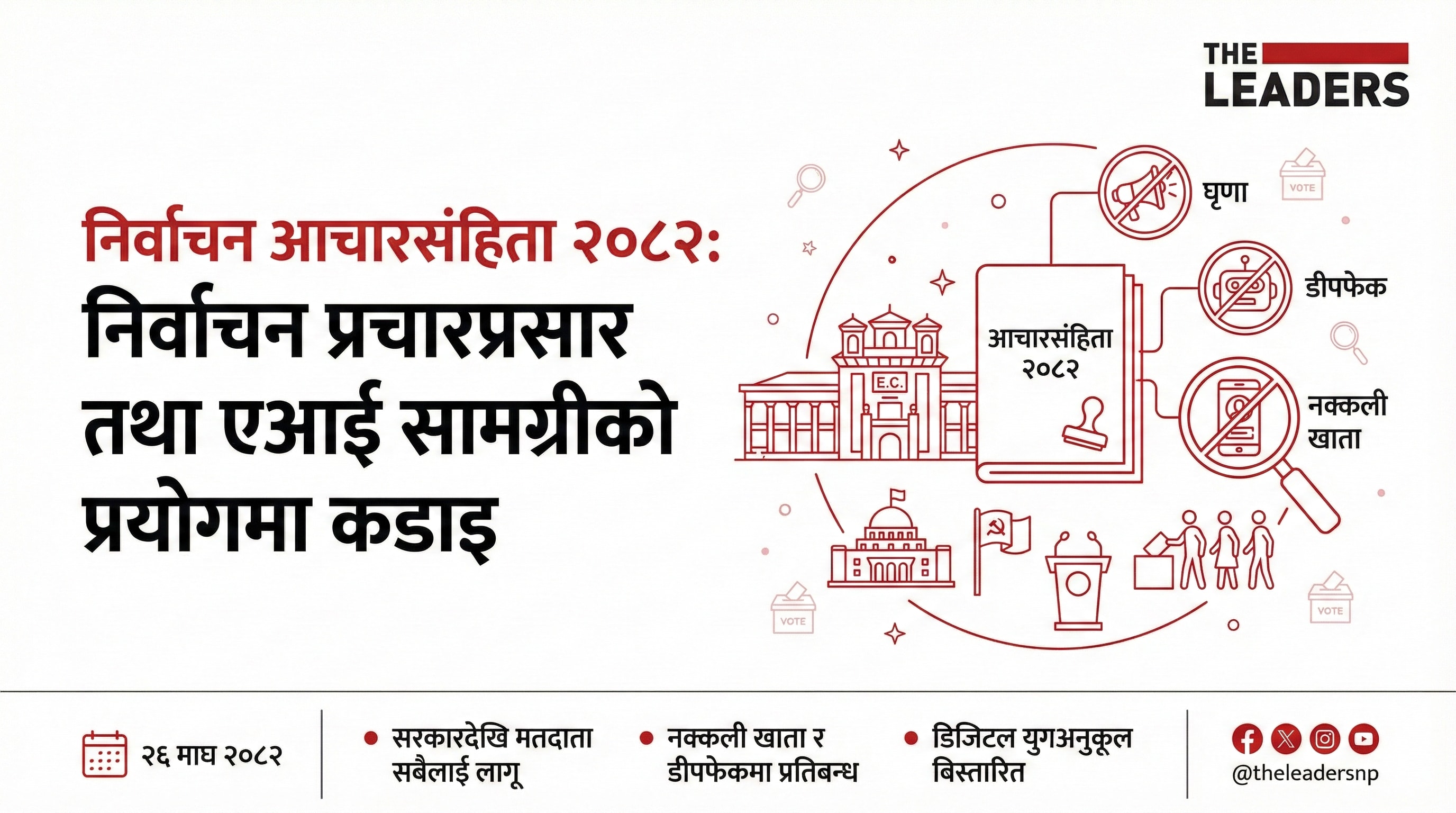
Wide coverage from ministers to voters
The EC’s revised Election Code of Conduct covers federal and provincial governments, ministers, constitutional bodies, civil servants, security agencies, political parties and their sister wings, as well as candidates and their representatives. Media houses, journalists, NGOs, educational institutions and even individual voters are also required to comply.
The objective is to ensure that state resources, public positions and media reach are not abused to influence voters unfairly. Government officials face limits on inaugurations, public spending announcements and transfers during the code period, while parties and candidates are bound by spending ceilings and transparency rules.
Stronger digital provisions
New provisions address the rapid growth of digital campaigning. The code prohibits spreading false or misleading information, running propaganda through fake or anonymous accounts, using AI-generated content such as deepfakes to mislead voters, and purchasing fake engagement to artificially inflate popularity.
Online advertisements that target specific groups must be clearly identified as paid political content, and platforms are encouraged to cooperate with regulators to remove posts that directly violate the code. The EC has urged parties and supporters to prioritise issue-based campaigning over personal attacks and disinformation.