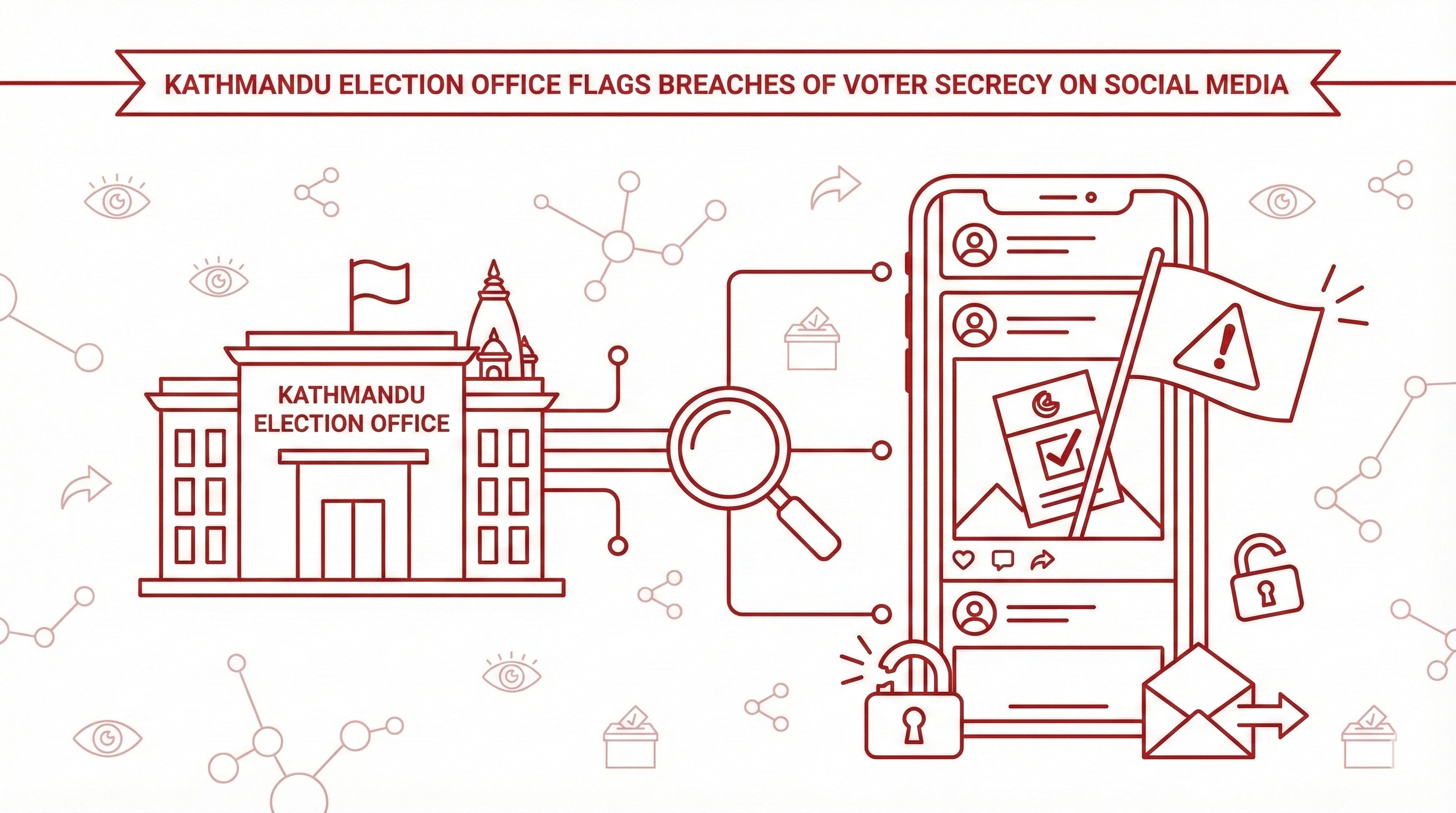
With only weeks left before the March 5 polls, the District Election Office Kathmandu has publicly warned political parties, candidates and some online outlets against practices that may violate voter confidentiality and the Election Code of Conduct 2082.
As reported by the Annapurna Express and other Kathmandu-based media, the office says it has received information about door‑to‑door canvassing, corner meetings and social media campaigns that effectively reveal or pressure voters' choices ahead of the formal campaign window. Concerns include online content that associates identifiable individuals or communities with specific parties or candidates in ways that could amount to coercion or social pressure.
The office has reminded parties that the code bars any attempt to influence voters before the legally defined period, and strictly protects the secrecy of the ballot. While the statement did not name specific actors, it draws a line between legitimate voter education and targeted propaganda that treats voters' private preferences as campaign material.
This intervention sits uneasily with a digital environment where people voluntarily post their political views while parties, influencers and micro‑targeted ads try to exploit that visibility. For Kathmandu's urban voters—who are among the most active online—the warning raises a harder question: how much of their political life on social media should be considered private, and what happens when parties treat that data as fair game?