
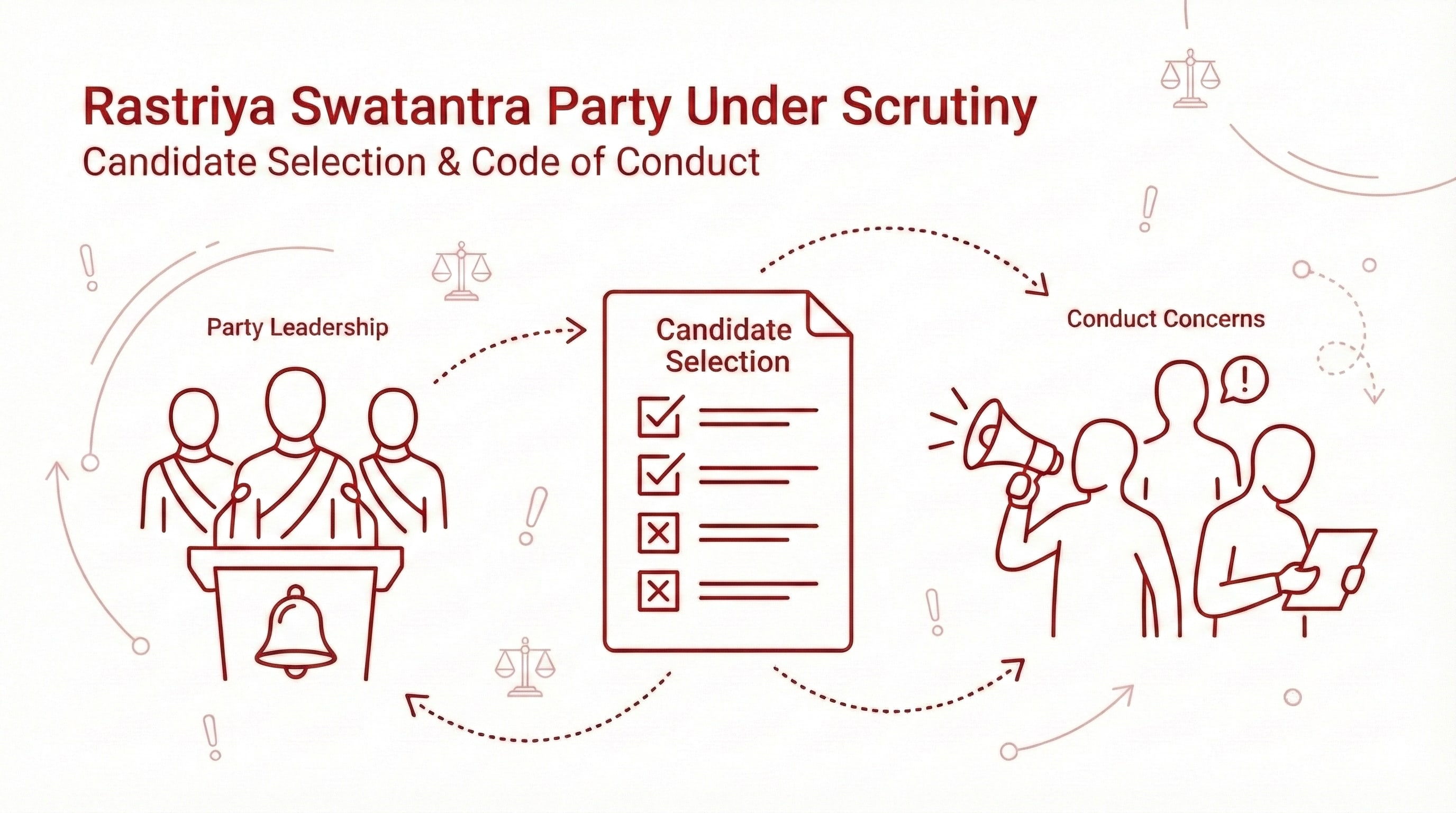
An in-depth report in The Kathmandu Post describes how the Rastriya Swatantra Party (RSP) is facing growing criticism over its behaviour in the build-up to the March 5 elections. The party, which initially distinguished itself by condemning the 'old' political culture, is now being accused of mimicking some of the same practices.
On the proportional representation (PR) side, the article notes that the RSP replaced 38 candidates in its closed list, the highest number among all parties, despite only two candidates formally withdrawing. Election rules allow replacements mainly when candidates opt out, so this raised questions about internal transparency and favouritism. In FPTP races, the party had promoted internal primaries as a hallmark of its approach, but it ultimately did not conduct primaries for the House of Representatives seats, citing ongoing party unification and time constraints.
Aspiring FPTP candidates say they each paid a fee of 25,000 rupees expecting competitive internal contests, and at least one aspirant in Kathmandu-5 has publicly demanded a refund after the party nominated another candidate without holding primaries. For the PR list, some hopefuls were also asked to pay 50,000 rupees to participate in internal selection, a practice that internal critics argue undermines the purpose of proportional representation, which is meant to open doors for less-resourced and marginalised groups.
At the same time, RSP leaders argue that fees were for administrative costs and for those who could afford them, and that individuals unable to pay were still able to participate. They also insist that they are following the Election Code of Conduct and cooperating with the EC's clarification processes regarding candidates such as Balendra Shah. For voters, the episode raises a broader question: when new parties promise to transform political culture, what standards should they be held to in their internal democracy and financial practices?