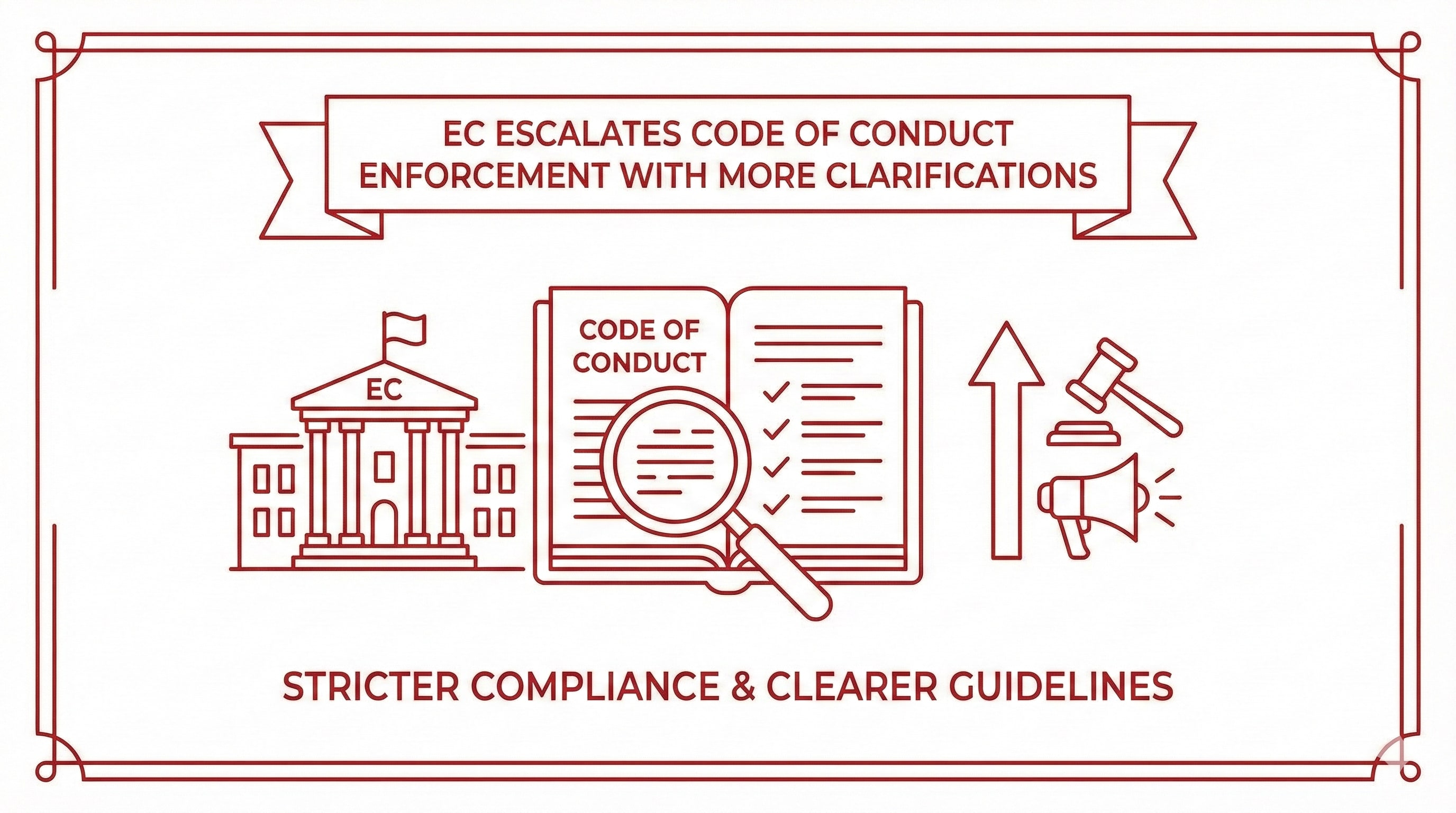
Implementation of the Election Code of Conduct 2082 has moved from paper to practice as the Election Commission (EC) continues to summon candidates and officials for alleged violations ahead of the March 5 polls.
Coverage in epardafas.com, Nepal News, MyRepublica and other outlets indicates that by late January the EC had sought at least 29 written clarifications from a mix of actors: House candidates, provincial chiefs, ministers, sports bodies and civil servants. Complaints describe alleged hate speech, threats, use of government positions to influence voters, unauthorised rallies, and social media content that may breach the code.
High-profile names such as Balendra Shah (Balen), Harka Sampang and other candidates have been asked to justify statements or campaign styles that allegedly cross legal lines. In some cases, like one candidate in Dolakha, the EC has accepted apologies and issued warnings; in others, there has been no response within the stipulated timeframe.
The Commission's actions show that the code is being used both against traditional abuses—such as using state resources for campaigns—and newer behaviours, including online harassment and symbolic campaigns linked to protest movements. However, civil society observers warn that selective or uneven enforcement could undermine the credibility of the effort.
For voters, these early enforcement steps are a signal of how seriously the EC and major parties are treating the promise of a cleaner campaign. But they also invite scrutiny: whose speech is being policed, and whose infractions are quietly ignored?